









What's Happening?
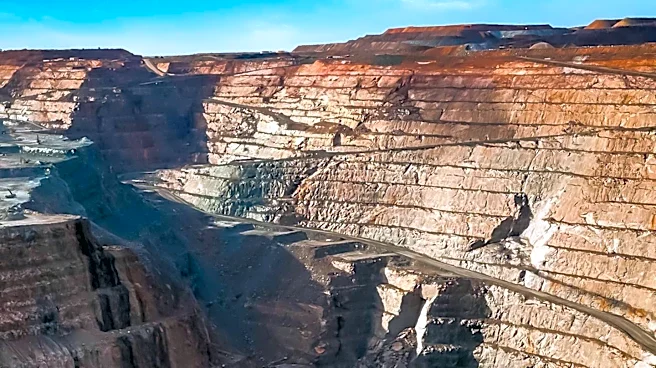
Mining financier Frank Giustra has highlighted a critical need for the copper industry to develop six new world-class mines annually until 2050 to prevent a severe supply shortfall. Giustra, with extensive experience in mining ventures, pointed out that
only a few major undeveloped copper deposits remain outside the control of large mining firms. He referenced a JPMorgan estimate predicting a significant copper deficit by 2030, which could expand further by 2035. The demand for copper is expected to rise, driven by sectors such as data centers, which alone may require substantial copper resources by the end of the decade.
Why It's Important?
The warning from Frank Giustra underscores the strategic importance of copper in the global economy, particularly as demand for this critical mineral is set to increase. Copper is essential for various industries, including technology and renewable energy, making its supply crucial for economic stability and growth. The potential shortfall could impact prices and availability, affecting industries reliant on copper. Additionally, the geopolitical dynamics surrounding mineral acquisition highlight the strategic maneuvers by countries like China, which have been securing mineral rights globally, potentially influencing global supply chains and economic policies.
What's Next?
The copper industry may see increased exploration and development activities as companies and governments respond to the projected supply shortfall. This could lead to strategic partnerships, investments in new mining technologies, and policy changes to facilitate the development of new mines. The geopolitical landscape may also shift as countries vie for control over critical mineral resources, potentially leading to new trade agreements or conflicts. Stakeholders in the mining sector will need to navigate these challenges to ensure a stable supply of copper in the coming decades.
Beyond the Headlines
The situation with copper supply highlights broader issues related to resource management and sustainability. As the demand for minerals like copper grows, there may be increased pressure on environmental regulations and community relations in mining regions. The industry will need to balance economic interests with environmental and social responsibilities, potentially leading to innovations in sustainable mining practices. Additionally, the strategic importance of minerals may influence global economic policies and alliances, as countries seek to secure their supply chains in an increasingly competitive landscape.