








What's Happening?
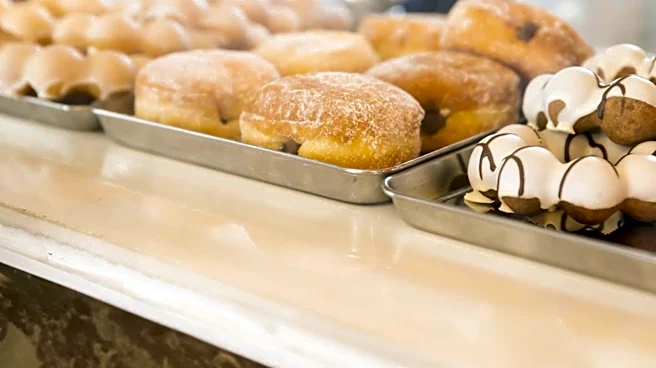
The perimeter bakery section in grocery stores, particularly donuts, is experiencing a resurgence as consumers seek special occasion baked foods and products perceived as more natural and fresh. This trend is helping grocery stores differentiate themselves
from competitors. Chad Larson, CEO of Mel-O-Cream Donuts, highlights that donuts have consistently resonated with people, even during uncertain times, proving to be nearly recession-proof. While center-store bakery sales have softened, the perimeter bakery has thrived. Retail buyers are focusing on how to maximize the potential of existing products, such as transforming donuts into dessert items or all-day snacks, rather than solely breakfast items. There's also a growing consumer interest in cleaner labels and understanding product ingredients, though not necessarily a demand for high-protein donuts.
Why It's Important?
The growth in perimeter bakery sales, especially through donuts, presents a significant opportunity for U.S. grocery retailers to boost traffic and increase profit margins. By leveraging donuts as an 'anchor point,' stores can enhance their appeal and offer value-added products. This shift reflects evolving consumer preferences for fresh, natural, and indulgent treats, even in smaller portions. The ability to repurpose existing bakery items into new offerings, such as waffle donuts or dessert-style donuts, allows grocery stores to increase the 'price per ring' – the revenue generated per unit sold – without significant additional investment in new SKUs. This strategy is crucial for balancing rising costs in the bakery industry, including freight and ingredients, and for optimizing expensive shelf and freezer space.
What's Next?
The bakery industry is expected to continue exploring innovative ways to utilize existing products to meet changing consumer demands. This includes positioning donuts as all-day snacks or dessert items, moving beyond their traditional breakfast association. Retailers will likely focus on creative applications, such as slicing Long Johns into 'donut fries' or using waffle irons to transform donuts into unique dessert offerings with decadent toppings. There will also be an emphasis on extending the availability of fresh donuts throughout the day, rather than just in the morning, to capture afternoon and evening shoppers. Furthermore, the industry will continue to address consumer interest in cleaner labels and smaller portion sizes, while maintaining the indulgent nature of bakery products.
Beyond the Headlines
The success of perimeter bakeries and donuts highlights a broader consumer trend towards affordable indulgences and comfort foods, especially during periods of economic uncertainty. This phenomenon suggests that while health-conscious movements like GLP-1s and high-protein diets are impacting other food categories, consumers are not willing to completely forgo treats. Instead, they are seeking moderation, smaller portions, and transparency in ingredients. The emphasis on transforming standard bakery items into more premium, versatile offerings also reflects a creative adaptation within the food industry to maximize value and appeal. This approach could influence other retail sectors to rethink how they present and market everyday products to cater to evolving consumer lifestyles and preferences.