

What's Happening?
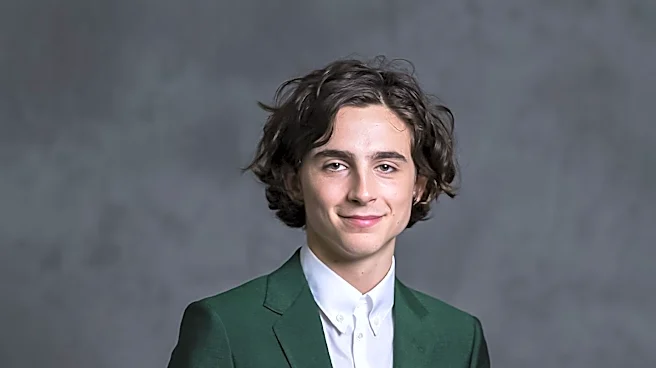
Actor Timothée Chalamet requested Mark Guiducci of Vanity Fair to write his cover story. The interview, which reportedly lasted 90 minutes, took place in Guiducci's one-bedroom Upper East Side apartment. This unconventional setting and the resulting profile
have drawn attention, with Hell Gate NYC describing the interview as 'excruciating.' The decision for Chalamet to personally select his interviewer and the intimate, non-traditional location for a high-profile magazine feature have become points of discussion. The article highlights the unique circumstances surrounding the creation of this particular celebrity profile for a major publication.
Why It's Important?
This event is important as it sheds light on the evolving dynamics between celebrities, journalists, and major publications like Vanity Fair. Chalamet's direct involvement in selecting his interviewer could indicate a growing trend of celebrities seeking more control over their public narratives and media portrayals. The 'excruciating' description from Hell Gate NYC suggests that this approach, while perhaps intended to foster a more personal connection, may not always result in a universally well-received or comfortable interview experience. For the entertainment industry, it raises questions about journalistic independence and the authenticity of celebrity profiles when the subject has a hand in choosing the interviewer. It also highlights the potential for public and critical scrutiny when such unconventional methods are employed.
Beyond the Headlines
The incident with Timothée Chalamet's Vanity Fair interview could signify a broader shift in how celebrity profiles are conducted and perceived. In an era where celebrities often control their image through social media, direct involvement in journalistic narratives might be seen as an extension of this control. This raises ethical considerations for journalism, particularly regarding the potential for conflicts of interest or the perception of a lack of objectivity when a subject hand-picks their interviewer. It also prompts a discussion about the nature of celebrity access and whether such intimate settings truly yield more authentic insights or merely create a curated, potentially uncomfortable, experience for both parties. The public's reaction, as evidenced by the 'excruciating' label, suggests a desire for transparency and genuine journalistic inquiry, even in the realm of celebrity features.