






What's Happening?
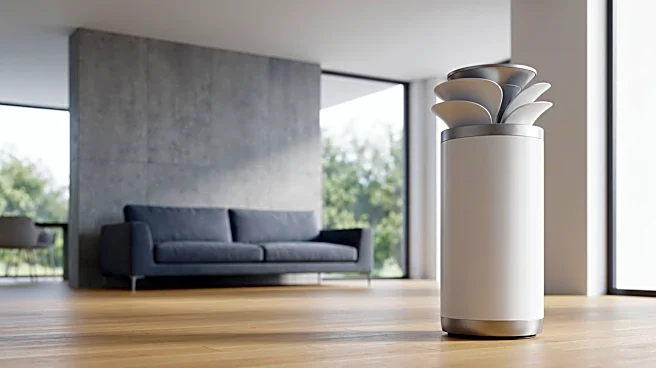
Dyson has expanded its HushJet range of environmental-care products, introducing new air purifiers at the Dyson Unveiled event in Berlin. The expansion includes the HushJet Big+Quiet Cool Pure+ Formaldehyde + UV, described as the largest and most powerful
purifier in the range, designed for multi-room purification and long-range air projection. This model features a low-pressure, high-flow compressor and a three-stage filtration system, which Dyson claims captures 99.999% of pollutants as small as 0.01 microns. The company also launched a medium-format HushJet Pure Cool+ Formaldehyde + UV for personal cooling and purification, and the HushJet Hot Cool Pure+ which adds heating for year-round use. These new products signify Dyson's shift towards connected machines that integrate sensors, software, and machine learning, moving beyond purely mechanical devices. The defining feature across the HushJet line is its flower-like, forward-facing nozzle, engineered using aviation principles to control turbulence and project air further while reducing noise.
Why It's Important?
This expansion by Dyson into more advanced and connected home environmental products reflects a growing consumer demand for smart home solutions that enhance indoor air quality and overall living comfort. The introduction of more powerful and versatile air purifiers, especially those designed for multi-room coverage and with additional functionalities like heating and cooling, addresses a significant market need for comprehensive home climate control. For U.S. consumers, this means access to sophisticated technology aimed at improving health and well-being by mitigating indoor air pollutants, including formaldehyde and microscopic particles. The integration of machine learning and smart features also indicates a broader trend in the home appliance industry towards automation and intelligent systems, potentially setting new standards for efficiency and user experience. This could influence other manufacturers to innovate further in the smart home sector, fostering competition and driving technological advancements that benefit consumers.
What's Next?
While the specific U.S. pricing and availability for the expanded HushJet range were not detailed in the provided information, Dyson typically rolls out its new products to key international markets, including the U.S., shortly after their global unveiling. Consumers can anticipate these new air purifiers becoming available through Dyson's official channels and major retailers. The company's focus on connected diagnostics, product guidance, and expanded in-store servicing through its MyDyson service platform suggests a continued emphasis on post-purchase support and customer engagement. This could lead to enhanced user experiences and potentially influence how other appliance manufacturers approach customer service for their smart home devices. Future developments might also include further integration of these devices into broader smart home ecosystems, allowing for more seamless control and automation alongside other connected appliances.
Beyond the Headlines
The evolution of Dyson's product line, particularly the HushJet range, highlights a significant societal shift towards prioritizing indoor environmental quality. As people spend more time indoors, concerns about air pollution, allergens, and airborne contaminants have grown, making advanced air purification systems increasingly essential rather than luxury items. The incorporation of machine learning and sophisticated sensor technology in these devices also raises questions about data privacy and the ethical implications of connected home appliances collecting environmental data. Furthermore, the design philosophy, drawing on aviation principles for airflow control, underscores an interdisciplinary approach to product development, where insights from diverse fields are applied to solve everyday problems. This trend could inspire more innovative design and engineering solutions across various consumer product categories, pushing the boundaries of what home appliances can achieve in terms of performance and user benefit.