







What's Happening?
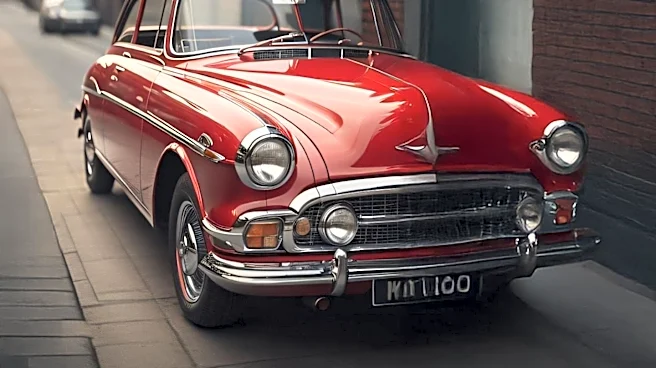
An Austrian car brand named Sauber, active from 1993 to 1995, imported American cars to Austria and sold them under the Sauber name. This operation involved establishing Sauber Automobiles USA, Inc. in Florida, likely to navigate import laws and taxes.
The Florida office purchased American vehicles, registered them in the U.S., and then exported them to Austria. Upon arrival, these vehicles underwent minor facelifts to comply with Austrian regulations and were rebadged as Sauber cars. For instance, a Sauber Villager was found to be nearly identical to a Mercury Villager. This discovery was made by YouTuber corsicar, who delved into the brand's obscure history, as information on this particular Sauber entity was previously scarce.
Why It's Important?
This historical business practice highlights a unique approach to automotive market entry and regulatory compliance in the mid-1990s. For U.S. automotive manufacturers, it demonstrates an indirect method of expanding their reach into European markets without directly establishing their own sales channels or extensive modifications for local regulations. The use of a U.S.-based subsidiary to facilitate exports and rebadging suggests a strategy to leverage existing American vehicle designs and production while adapting them minimally for a foreign market. This could have offered a cost-effective way for the Austrian company to offer a range of vehicles, potentially impacting the competitive landscape for both American and European car manufacturers during that period.
What's Next?
While the Austrian car brand Sauber was short-lived and is no longer active, its historical business model offers insights into past international trade practices in the automotive industry. The current status of the Austrian car brand is not definitively answered by the sources, but its operational period was limited to 1993-1995. The Sauber name is now primarily associated with Sauber Motorsport AG, which is part of Audi's F1 team, known as Audi F1. This distinction is crucial, as the two entities are unrelated despite sharing a name. Future historical analyses of automotive trade might reference such rebadging strategies as examples of market penetration tactics.
Beyond the Headlines
The story of the Austrian Sauber brand touches upon the broader themes of globalization and market adaptation in the automotive sector. It illustrates how companies can creatively circumvent trade barriers and regulatory hurdles through rebadging and strategic international subsidiaries. This practice raises questions about brand identity and consumer perception, as vehicles were sold under a different name despite being largely unchanged American models. The obscurity of this brand until recent investigations also underscores how certain business ventures, even those involving international trade, can fade from public memory, only to be rediscovered through dedicated research, offering valuable lessons on niche market strategies and the complexities of international commerce.