





What's Happening?
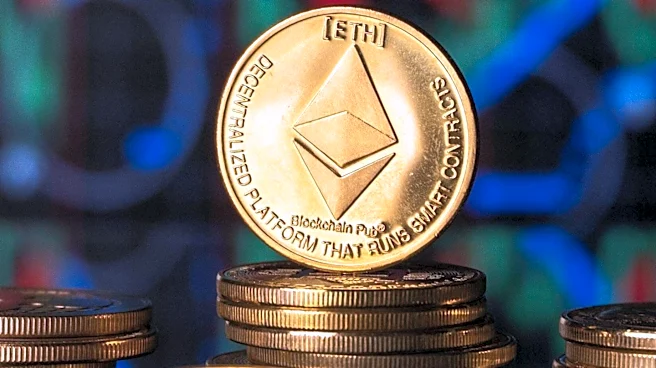
Tom Lee, chairman of BitMine Immersion Technologies, stated in a November 23, 2026, update that Ethereum (ETH) is as scarce as Bitcoin (BTC) based on their respective supply growth rates. Lee estimated Ethereum's annual supply growth at 0.90%, slightly
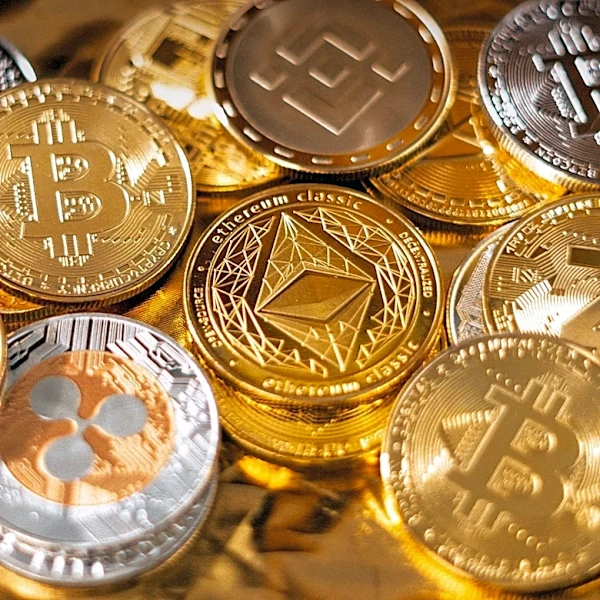
higher than Bitcoin's 0.82%, suggesting both cryptocurrencies can be considered 'hard money.' Despite this assertion, Ethereum's price has fallen 42.4% in 2026 to approximately $1,670, while Bitcoin's price has dropped 30.3% to around $59,500. Bitcoin has a fixed supply cap of 21 million coins, with its supply growth rate decreasing after each halving event. In contrast, Ethereum has no maximum supply, and its supply growth is influenced by transaction fees, with a portion of fees being 'burned' or destroyed, potentially reducing supply when network activity is high. However, current low transaction fees mean that approximately 92,000 new Ethereum are added monthly, valued at about $153 million, indicating the fee burn is not significantly impacting overall supply.
Why It's Important?
Tom Lee's comparison of Ethereum's scarcity to Bitcoin's is significant for the cryptocurrency market, particularly for investors and stakeholders in both assets. Lee's company, BitMine Immersion Technologies, holds a substantial amount of Ethereum, making his perspective influential. If Ethereum is indeed perceived as equally scarce, it could bolster its long-term investment appeal, potentially attracting more institutional and retail investors. However, the market's current performance, with both cryptocurrencies experiencing significant price declines, suggests that scarcity alone is not the sole driver of value in the short term. The differing mechanisms of supply control—Bitcoin's fixed cap versus Ethereum's fee burn—highlight fundamental differences that could impact their long-term scarcity profiles. Bitcoin's predictable halving events offer a clear path to increasing scarcity, while Ethereum's scarcity is more dependent on network activity and transaction fees, which can fluctuate.
What's Next?
The debate over Ethereum's scarcity relative to Bitcoin will likely continue, with market participants closely monitoring supply growth rates and price movements. If Ethereum's network activity increases significantly, leading to higher transaction fees and a more substantial 'burn' rate, its supply growth could potentially slow down, reinforcing Lee's argument. Conversely, if transaction fees remain low, Ethereum's supply could continue to grow faster than Bitcoin's, challenging the notion of comparable scarcity. The next Bitcoin halving event, expected in 2028, will further reduce its supply growth rate, potentially widening the scarcity gap between the two cryptocurrencies. Investors will need to consider these dynamics when evaluating the long-term value proposition of both Bitcoin and Ethereum.
Beyond the Headlines
The discussion around cryptocurrency scarcity extends beyond simple supply numbers to encompass the underlying economic models and network effects. Bitcoin's fixed supply cap is a core tenet of its 'digital gold' narrative, emphasizing its role as a store of value. Ethereum's model, with its variable supply and fee-burning mechanism, aims to balance network utility with economic incentives for validators. The migration of activity to more cost-effective layer 2 networks on Ethereum could inadvertently keep mainnet fees low, thereby limiting the effectiveness of the fee burn in controlling supply. This highlights a complex interplay between technological development, network usage, and economic policy within the cryptocurrency ecosystem. The long-term implications of these differing supply mechanisms will be crucial in determining the future roles and valuations of Bitcoin and Ethereum in the broader financial landscape.