








What's Happening?
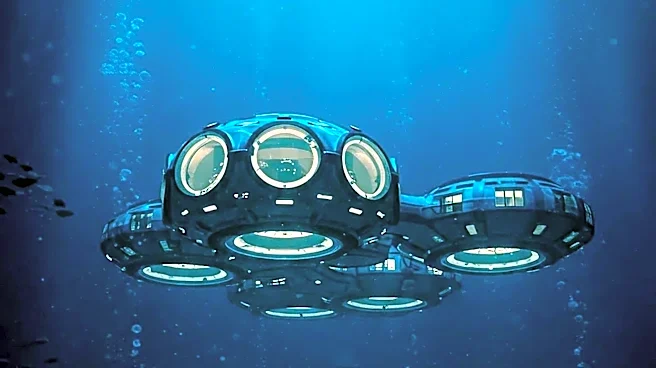
Floating nuclear power platforms are emerging as a viable solution for clean and reliable energy, particularly in remote coastal regions and small island developing states (SIDS). These platforms, known as Floating Nuclear Power Plants (FNPPs), are nuclear generation
units mounted on barges or platforms, providing reliable baseload electricity with minimal carbon emissions. Unlike solar and wind, FNPPs are not intermittent, making them suitable for smaller or weaker grids. The technology is gaining attention due to pressures of decarbonization, energy security, and rising electricity demand. FNPPs can be manufactured in shipyards, towed to sites, and connected to local grids, offering a flexible and scalable energy solution. The only operational FNPP is Russia's Akademik Lomonosov, with other countries like the United States, Denmark, South Korea, and China exploring similar technologies.
Why It's Important?
The development of floating nuclear power platforms is significant as it addresses multiple global challenges, including the need for clean energy, energy security, and efficient use of land. For regions dependent on imported fuels, FNPPs offer a pathway to energy independence and reduced exposure to fuel price volatility. The technology also supports water resilience by powering desalination processes, crucial for areas facing freshwater scarcity. The potential for FNPPs to provide firm, low-carbon power without consuming scarce land makes them an attractive option for policymakers and utilities. As the search for flexible energy infrastructure intensifies, floating nuclear power could become a strategically important segment in offshore power.
What's Next?
The future of floating nuclear power platforms depends on overcoming regulatory, political, and financial challenges. The technology's success will require a supportive ecosystem for bankable projects, including nuclear licensing, maritime regulation, and public acceptance. As more countries explore FNPPs, the focus will be on demonstrating their commercial viability and scalability. The development of standardized designs and modular construction methods could reduce construction risks and make FNPPs more attractive than conventional nuclear plants in certain markets. The ongoing exploration of advanced reactor concepts and international collaboration will shape the trajectory of floating nuclear power.
Beyond the Headlines
Floating nuclear power platforms present ethical and legal considerations, particularly regarding nuclear licensing and maritime regulation. The deployment of FNPPs involves complex political and regulatory questions, especially when plants are built in one country, operated by another, and deployed in a third. Public acceptance and safety concerns will play a crucial role in the technology's adoption. The potential for FNPPs to provide multi-utility services, including heat and desalinated water, highlights their broader impact on infrastructure challenges. As the technology evolves, it could redefine energy markets and contribute to long-term shifts in energy policy and environmental sustainability.