





What's Happening?
Boeing Director Akhil Johri purchased 3,000 shares of Boeing stock for approximately $500,067 on November 17, at an average price of $166.689 per share. This transaction increased his direct holdings to 3,150 shares. This move follows a recent 25% to 26%
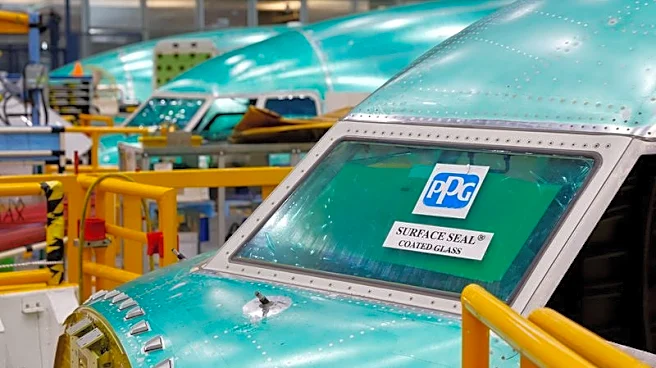
slump in Boeing's stock price, which has been trading near its 52-week low, around $161.75 to $163. Johri's purchase is the third reported director buy in less than three weeks, with previous transactions by Mortimer Buckley and Steven Mollenkopf totaling about $1.51 million. The company's operational performance shows a mixed picture, with 49 aircraft delivered in October, a decrease from 57 in September. However, Boeing secured 165 gross orders in October, marking its strongest October total since 1997, largely due to a 140-jet 737 MAX order from aircraft lessor Avolon. Production constraints continue to pose challenges for cash flow and margins despite the strong order book.
Why It's Important?
The recent stock purchases by Boeing directors, including Akhil Johri, signal a potential vote of confidence from insiders amidst a significant decline in the company's share price. Such insider buying can be interpreted by investors as a belief that the stock is undervalued and has future growth potential, potentially influencing market sentiment. For the aerospace industry, Boeing's operational challenges, particularly production constraints, highlight broader supply chain and manufacturing hurdles that could affect delivery schedules and profitability across the sector. The strong order intake, especially the large 737 MAX order, underscores continued demand for commercial aircraft, which is crucial for the recovery and expansion of airlines and the travel industry. However, the persistent production issues could limit Boeing's ability to capitalize fully on this demand, impacting its financial performance and market share against competitors.
What's Next?
Boeing will likely continue to focus on addressing its production constraints to improve aircraft delivery rates and enhance cash flow and margins. The company's ability to overcome these operational hurdles will be critical for its financial recovery and for sustaining investor confidence. Future stock performance will depend on a combination of successful aircraft deliveries, new order acquisitions, and effective management of its supply chain. Investors will closely monitor upcoming earnings reports and delivery figures for signs of improvement. The ongoing insider buying suggests that some within the company believe in a rebound, but the broader market will require tangible evidence of operational efficiency and financial stability before a sustained recovery in stock price can be expected. The aerospace market will also be watching how Boeing navigates global economic conditions and geopolitical factors that could influence demand for new aircraft.