



What's Happening?
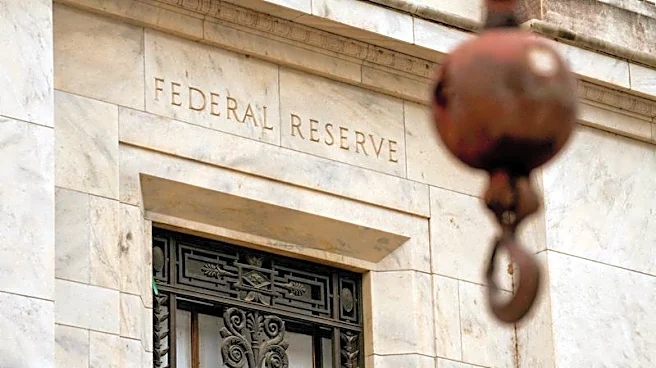
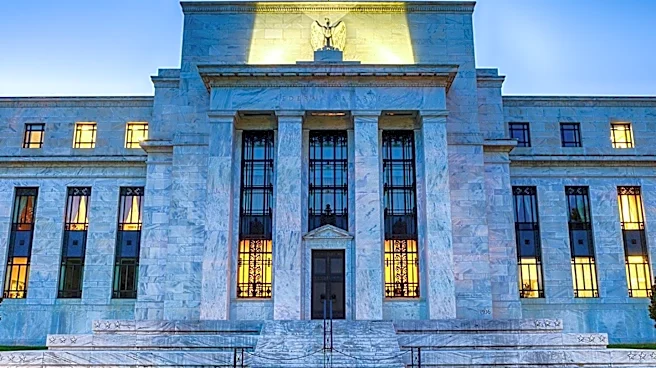
The Federal Reserve is actively employing Quantitative Tightening (QT) as a monetary policy tool to reduce the money supply and normalize its balance sheet. QT involves the Fed decreasing its holdings of financial assets, either by selling them into financial markets
or by allowing them to mature without reinvestment. This process is the opposite of Quantitative Easing (QE), which expands the balance sheet to stimulate the economy. The Fed has conducted two major QT programs: one from 2017 to 2019 and another that began in June 2022. The primary goal of QT is to raise interest rates to combat inflation by slowing demand for goods and services. Since June 2022, the Fed has reduced its balance sheet by over $2 trillion, with total security holdings falling by $2.05 trillion by March 2025. This action is part of a broader strategy to manage the economy, particularly in response to historically high inflation experienced after the COVID-19 pandemic.
Why It's Important?
Quantitative Tightening significantly impacts the U.S. financial landscape by influencing interest rates, market liquidity, and asset prices. Rising interest rates during QT periods can compress valuations for growth stocks, widen corporate bond spreads, and make longer-duration assets less attractive compared to shorter-term instruments. While the direct economic impact of QT may be less pronounced than QE, its interaction with inflation expectations, credit conditions, and investor sentiment is crucial. Investors need to understand these monetary policy cycles to assess portfolio risk and evaluate individual securities effectively. The Fed's use of QT aims to stabilize the economy by controlling inflation, which directly affects the purchasing power of consumers and the operational costs for businesses. The success of QT in achieving its objectives without causing undue market disruption is vital for maintaining economic stability and investor confidence.
What's Next?
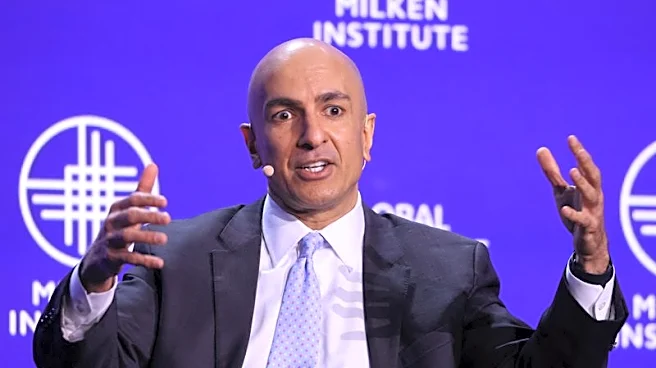
The Federal Reserve operates under an 'ample reserves regime,' meaning QT cannot proceed to the point where reserves become scarce. Estimates for this scarcity threshold vary, ranging from 7% to over 13% of GDP, equivalent to $2 trillion to $3.8 trillion. The role of the Treasury General Account (TGA) and the overnight reverse repurchase agreement (ONRRP) also complicates the picture, as shifts in these liabilities can affect bank reserves. Some Fed officials and academics advocate for further balance sheet reduction, especially given the increased demand for reserves due to post-crisis bank regulations. Analysts believe the groundwork is being laid for a potential restart of a gradual QT process. If implemented cautiously and with continuous monitoring, the implications for broader markets are expected to be negligible, similar to the recent experience where markets 'barely seemed to notice' the end of the last QT round.
Beyond the Headlines
The implementation of Quantitative Tightening highlights a deeper shift in how the Federal Reserve manages monetary policy. The transition from a 'scarce reserves' to an 'ample reserves' regime, adopted in 2008, fundamentally changes the mechanics of interest rate control. Instead of directly adjusting the supply of reserves, the Fed now influences market rates through administered rates like the interest rate on reserve balances (IORB) and the ONRRP rate. This framework requires careful management to ensure reserves remain sufficient, preventing unintended market volatility. The debate over the optimal level of reserves and the potential for future QT underscores the ongoing evolution of central banking strategies in response to complex economic conditions. The long-term implications involve balancing inflation control with maintaining financial market stability, a delicate act that shapes the economic environment for years to come.