


What's Happening?
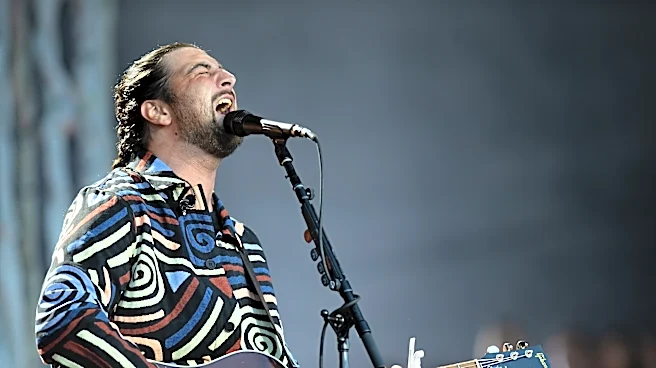
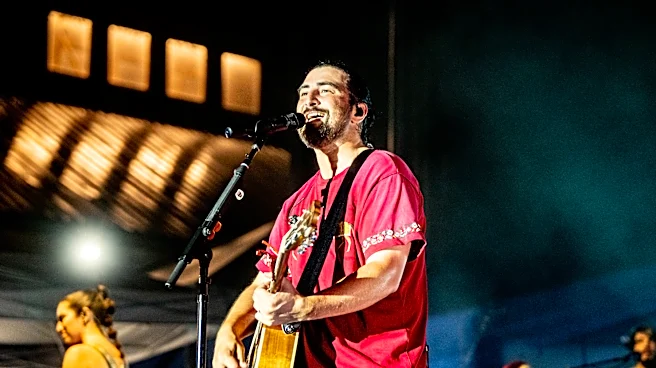
Jack Antonoff, frontman of Bleachers and a prominent music producer, has publicly criticized Ed Sheeran for his handling of the controversy surrounding Macklemore's removal from Sheeran's 'Loop Tour'. Macklemore was reportedly removed after making pro-Palestinian
comments during a performance. Antonoff stated that Sheeran missed a 'massive, beautiful opportunity' to take a stand against corporate pressure. He suggested that Sheeran should have canceled his entire tour and performed for free outside each venue to raise funds for the Palestinian cause, rather than succumbing to the demands of a 'billionaire'. Antonoff's comments align him with other artists like Lorde, Roger Waters, Chris Shiflett, and Finneas, who have also expressed support for Macklemore and criticized Sheeran's actions. Macklemore, in response to his removal, organized his own 'Free Palestine' shows in Dublin, Paris, and London, which quickly sold out, demonstrating public support for his stance.
Why It's Important?
This situation highlights the increasing pressure on artists to navigate complex geopolitical issues and the potential consequences of their public stances. Antonoff's criticism of Sheeran underscores a broader debate within the entertainment industry regarding artistic freedom versus corporate influence. The incident suggests that artists who choose to speak out on sensitive topics, such as the Israeli-Palestinian conflict, may face professional repercussions, as seen with Macklemore's removal. Conversely, artists who remain silent or are perceived as caving to corporate demands, like Sheeran in Antonoff's view, may face backlash from peers and segments of their audience. This dynamic can influence how artists use their platforms, potentially leading to self-censorship or, conversely, inspiring more vocal activism. The rapid sell-out of Macklemore's independent shows indicates a significant audience appetite for artists who align with certain social and political causes, suggesting that taking a stand, even if it leads to corporate friction, can resonate deeply with fans and create alternative avenues for artistic expression and financial success.
What's Next?
The ongoing debate is likely to continue influencing how artists and their management approach tours, endorsements, and public statements, particularly concerning politically charged topics. Other artists may be encouraged or deterred from expressing their views, depending on how the public and industry react to such incidents. Macklemore's successful independent 'Free Palestine' tour could serve as a model for other artists seeking to maintain artistic integrity and support causes without corporate constraints. This could lead to a rise in artist-led initiatives and independent tours focused on social and political advocacy. The incident may also prompt further discussions within the music industry about the ethical responsibilities of promoters and venue owners when artists express political opinions. The long-term impact could be a re-evaluation of contractual clauses related to artist conduct and public statements, potentially leading to more explicit guidelines or, conversely, stronger protections for artistic expression.
Beyond the Headlines
This controversy delves into the ethical dimensions of artistic responsibility and the power dynamics between artists, corporate entities, and political causes. Antonoff's call for Sheeran to prioritize a humanitarian cause over tour obligations raises questions about the moral obligations of public figures and the extent to which their platforms should be used for activism. The incident also exposes the tension between commercial interests and artistic integrity, particularly when significant financial stakes are involved. The 'billionaire' influence mentioned by Antonoff points to a broader concern about how wealth and corporate power can shape cultural narratives and limit freedom of expression in the arts. This situation could contribute to a growing trend where artists are increasingly expected by their audiences to take clear stances on social and political issues, moving beyond purely entertainment roles. It also highlights the potential for artists to leverage their influence to raise awareness and funds for humanitarian efforts, even if it means challenging established industry norms.