


What's Happening?
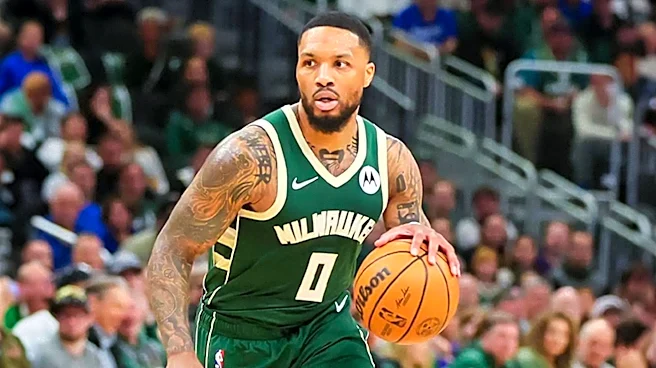
Damian Lillard has candidly discussed his two-year tenure with the Milwaukee Bucks, acknowledging that the team's bold experiment to pair him with Giannis Antetokounmpo ultimately did not achieve its championship goal. Lillard, who joined the Bucks in September
2023 via a three-team trade, revealed that he was going through a difficult personal period, including a divorce, which contributed to his struggles. He emphasized that despite personal challenges, he gave his full effort to the team. Lillard also highlighted the significant impact of injuries on the team's playoff runs, noting that Giannis Antetokounmpo was hampered by a calf injury in 2024, and Lillard himself tore his Achilles in 2025 after recovering from a blood clot. He described the experience as a 'solid experience' and 'necessary' for his personal growth.
Why It's Important?
Lillard's reflections offer a critical perspective on the high-stakes nature of NBA superteams and the unpredictable role of player health and personal well-being in team success. The Milwaukee Bucks' acquisition of Lillard was a significant move aimed at securing another championship, and its failure to do so underscores the complexities beyond talent aggregation. This situation highlights how injuries to key players like Antetokounmpo and Lillard can derail even the most promising rosters, impacting team performance and financial investments. Furthermore, Lillard's openness about his personal struggles sheds light on the immense pressure professional athletes face, both on and off the court, and how these factors can influence their professional output and team dynamics. The outcome serves as a cautionary tale for teams relying heavily on star power without considering the holistic well-being and health of their athletes.
What's Next?
Following Lillard's departure and the team's subsequent rebuilding phase, the Milwaukee Bucks will continue to navigate their future without both Lillard and Antetokounmpo, focusing on developing new talent and restructuring their roster. Lillard, now with a new team, will aim to revitalize his career and contribute to a different championship pursuit, potentially with a renewed focus after overcoming personal and professional hurdles. The NBA will likely continue to see teams attempt to form 'superteams,' but Lillard's experience may prompt a more cautious approach, emphasizing team chemistry, player health, and robust support systems. The league will also monitor the long-term effects of such high-profile trades on team stability and fan expectations.
Beyond the Headlines
Lillard's candid interview delves into the often-unseen human element behind professional sports. Beyond the statistics and trade headlines, athletes are individuals facing personal challenges that can profoundly affect their performance. His experience with the Bucks, marked by both high expectations and significant setbacks, illustrates the psychological toll of professional sports, especially when personal life intersects with public performance. This narrative encourages a deeper understanding of athlete welfare, suggesting that teams and leagues must consider mental and physical health as integral components of player success and team longevity. It also raises questions about the sustainability of 'win-now' strategies that might overlook the long-term well-being of players and the potential for unforeseen personal circumstances to impact team investments.