







What's Happening?
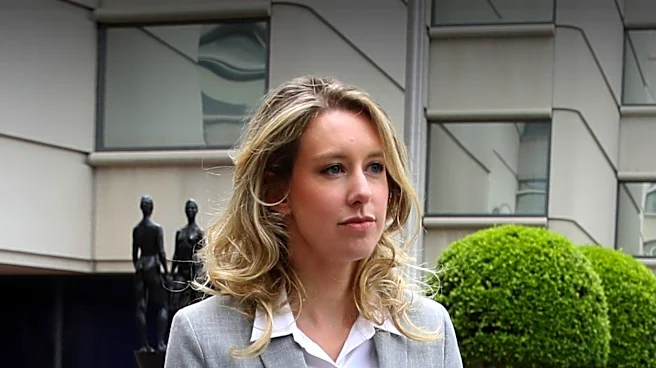
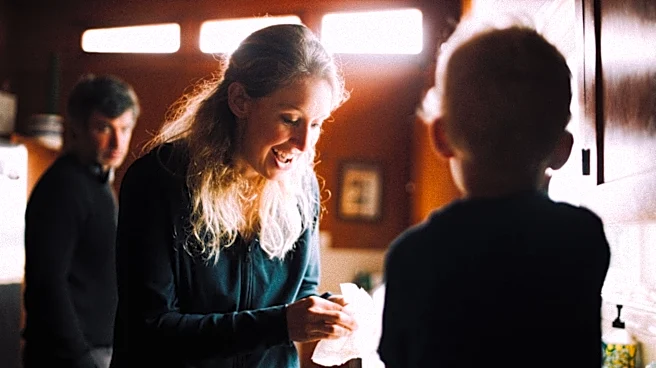
Nathan Fielder, known for his surreal and thought-provoking projects, has co-directed a new A24 documentary titled 'You Can See Everything.' The film centers on Elizabeth Holmes, the former Theranos CEO convicted of fraud, during the 34 days leading up
to her federal prison sentence in May 2023. Fielder and co-director Lance Oppenheim were granted complete access to Holmes and her partner, Billy Evans, in a rented home. The documentary's first half captures this period, offering an exclusive look at Holmes' life before incarceration. The film then takes an unexpected turn after Holmes reports to prison, delving into Fielder's signature mind-bending style, which challenges perceptions of truth and reality. The documentary has received critical acclaim, with many praising its unique approach to storytelling and its exploration of sincerity and intention.
Why It's Important?
This documentary is significant as it offers a rare and intimate glimpse into the life of a highly scrutinized public figure, Elizabeth Holmes, during a pivotal moment. The involvement of Nathan Fielder, a creator known for blurring the lines between reality and performance, adds a unique layer of complexity, prompting viewers to question the nature of truth and media representation. The film's exploration of Holmes' character, removed from the usual media circus, could influence public perception and understanding of her case. Furthermore, the documentary's critical success and potential for Oscar nominations highlight its artistic merit and its contribution to the evolving landscape of documentary filmmaking, particularly in how it engages with controversial subjects and the concept of objective reality.
What's Next?
Given its critical acclaim, 'You Can See Everything' is expected to be a strong contender for various awards, including Oscar nominations in the Best Documentary Feature category. The film's unique narrative structure and Fielder's reputation for challenging audience perceptions are likely to spark extensive discussion and analysis among film critics and the public. Its release will likely encourage further examination of Elizabeth Holmes' story and the broader implications of corporate fraud and media portrayal. The film's success could also influence future documentary projects, encouraging more experimental and introspective approaches to real-life events and figures.
Beyond the Headlines
The documentary delves into profound ethical and philosophical questions surrounding truth, perception, and the role of media in shaping narratives. By granting Fielder unprecedented access, Holmes and Evans have allowed for a portrayal that aims to humanize them, potentially shifting public discourse from outright condemnation to a more nuanced understanding of their situation. Fielder's method, which often involves creating controlled, artificial environments to elicit genuine reactions, raises questions about the ethics of documentary filmmaking and the manipulation of reality for artistic or investigative purposes. The film's exploration of how individuals, particularly those in the public eye, construct and present their own truths, offers a deeper insight into human psychology and the societal impact of deception.