




What's Happening?
Super Micro Computer (SMCI) is experiencing supply disruptions in Southeast Asia for its AI server business. This follows Nvidia's decision to suspend shipments of advanced AI server components to the region, a move prompted by new U.S. export controls.
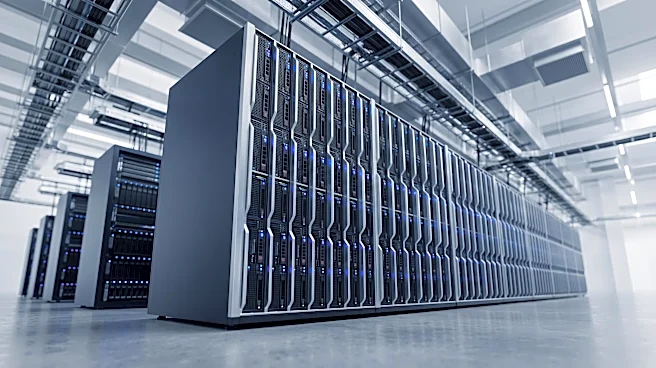
These high-end AI chips are crucial for Supermicro's large-scale AI data center deployments. The export pause directly impacts customers in key Southeast Asian markets who were expanding their AI data centers, potentially leading to delivery uncertainties. Super Micro Computer, which builds modular server and storage hardware globally, relies on these components to configure and deliver systems for complex AI workloads. The company's business spans the United States, Asia, and Europe, offering some geographic flexibility, but the current situation tests its supply chain integrity and compliance with export regulations.
Why It's Important?
This disruption is significant for Super Micro Computer as it challenges the company's strategy of converting high AI demand into higher-margin, rack-scale solutions. Nvidia's shipment pause into Southeast Asia directly affects Super Micro's supply chain and its customer concentration in the region, potentially impacting near-term orders. While Super Micro Computer has a diversified pipeline of large-scale projects, including growing international and sovereign demand for national AI infrastructure, the export controls introduce complexities. The company's ability to leverage a wider mix of regions, customers, and chip partners will be crucial. Super Micro's new AMD EPYC-based H15 servers and Petascale storage systems offer non-Nvidia options for AI racks, which could mitigate the impact compared to vendors solely reliant on Nvidia's GPU ecosystem. However, the situation raises concerns about execution on margins and cash conversion if export rules necessitate rerouting high-end AI builds to other jurisdictions.
What's Next?
The immediate focus for Super Micro Computer will be to navigate the Southeast Asia delays and assess the full impact of Nvidia's export halt. The company will likely emphasize its ability to leverage a broader mix of regions, customers, and alternative chip partners, such as those offering AMD EPYC-based solutions, to maintain its AI rack offerings. Analysts have already highlighted working capital and non-cash earnings quality as key risks for Super Micro Computer. Any reshuffling of supply chains due to export controls could further stress these areas, even if overall AI demand remains strong through AMD partnerships, sovereign projects, or data center builds in less restricted regions. The company's long-term outlook will depend on its adaptability to evolving export regulations and its success in diversifying its supply and customer base.
Beyond the Headlines
The situation with Super Micro Computer and Nvidia highlights the broader implications of U.S. export controls on the global technology supply chain, particularly in the rapidly expanding AI sector. These controls can create geopolitical shifts, influencing where AI infrastructure is developed and deployed. Countries in Southeast Asia, which were positioning themselves as alternatives to China for AI data center expansion, now face increased uncertainty. This could lead to a re-evaluation of national AI infrastructure strategies and a push for greater self-reliance or diversification of technology partners. For companies like Super Micro Computer, it underscores the increasing importance of supply chain resilience, compliance with international regulations, and the strategic development of alternative product lines to mitigate risks associated with single-source dependencies or regional restrictions. The incident also points to the ongoing tension between technological advancement and national security interests.