



What's Happening?
Fast Retailing, the parent company of Uniqlo, has announced a record performance for the fiscal year ending August 31, 2026. The company's revenue surged by 16.6% to 3.96 trillion yen, demonstrating significant growth in both revenue and operating profit.
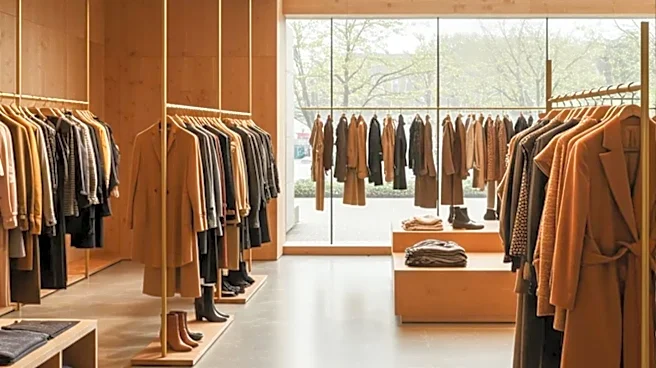
This strong financial showing positions Fast Retailing to potentially surpass H&M and become the world's second-largest apparel retailer by sales. The company's strategy includes focusing on large, multi-level stores, with plans to double its Japanese flagship stores to 20 over the next decade. A key factor in its success is its distinct sourcing approach, which prioritizes quality and involves long-term partnerships with a smaller number of suppliers, predominantly located in Asia.
Why It's Important?
Fast Retailing's impressive growth and strategic expansion have significant implications for the global apparel industry. Its potential rise to the second-largest retailer by sales indicates a shift in market dominance, challenging established players like H&M. For U.S. consumers, this could mean increased competition and potentially more diverse product offerings as Uniqlo expands its global footprint. The company's emphasis on quality and long-term supplier relationships could also influence industry standards, pushing other retailers to re-evaluate their supply chain practices. This development highlights the growing influence of Asian-based apparel companies in the global market and their ability to innovate and scale effectively.
What's Next?
Fast Retailing is expected to continue its aggressive expansion, particularly with its plan to double Japanese flagship stores. This domestic growth, coupled with its strong international performance, suggests a sustained effort to capture a larger share of the global apparel market. The company's focus on its unique sourcing strategy will likely remain a core element of its business model, potentially leading to further efficiencies and product quality improvements. Competitors like H&M will need to adapt their strategies to counter Fast Retailing's momentum, possibly by enhancing their own supply chains or expanding into new markets. The coming years will reveal whether Fast Retailing successfully overtakes H&M and solidifies its position as a top-tier global apparel retailer.
Beyond the Headlines
Fast Retailing's success underscores a broader trend in the retail sector: the increasing importance of supply chain resilience and ethical sourcing. By prioritizing quality and fostering long-term relationships with fewer suppliers, Fast Retailing mitigates risks associated with fast fashion's often-criticized production methods. This approach could set a new benchmark for sustainability and responsible manufacturing within the apparel industry. Furthermore, the company's commitment to large, experiential retail spaces suggests a belief in the enduring value of physical stores, even in an increasingly digital retail landscape. This strategy contrasts with many retailers who are scaling back physical footprints, indicating a potential divergence in successful retail models.