



What's Happening?
Mortgage rates in the U.S. have decreased for the first time in over two months, according to the Mortgage Bankers Association (MBA). The average contract interest rate for 30-year fixed-rate mortgages with conforming loan balances dropped to 7.41 percent
from 7.50 percent. Similarly, 15-year fixed-rate mortgages saw their average contract interest rate decrease to 6.73 percent from 6.87 percent. Despite this reduction in rates, mortgage applications continued to decline. The Market Composite Index, a measure of mortgage loan application volume, decreased by 5.3 percent from the previous week. Both purchase and refinance applications saw declines, with purchase applications falling 18 percent behind last year's pace. Joel Kan, CMB, MBA’s Vice President and Deputy Chief Economist, noted that lower rates were insufficient to stimulate application activity, indicating that higher rates are still pricing buyers out of the market. The share of adjustable-rate mortgages (ARMs) remained steady at 10.5 percent, as ARM rates were nearly a full percentage point lower than 30-year fixed rates.
Why It's Important?
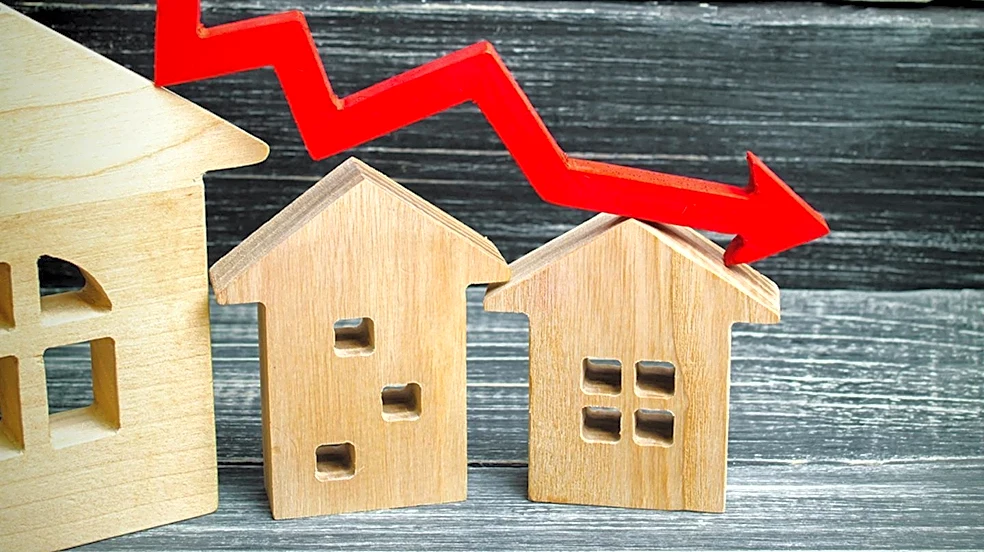
This decline in mortgage rates, while a positive sign, highlights the ongoing challenges in the U.S. housing market. The continued fall in mortgage applications, despite lower rates, suggests that affordability remains a significant barrier for many potential homebuyers. Higher interest rates over the past year have cooled the housing market, making homeownership less accessible. This trend impacts not only individual consumers looking to purchase homes but also the broader real estate and construction industries. A sustained period of low application volume could lead to reduced housing demand, potentially affecting home prices and new construction projects. Lenders and financial institutions are also impacted by decreased application activity, which can affect their revenue streams. The stability of ARM shares indicates that some borrowers are seeking alternative financing options to manage costs, reflecting a cautious approach in the current economic climate.
What's Next?
The housing market will likely continue to be influenced by interest rate fluctuations and broader economic conditions. While the recent rate decrease is a step in the right direction, a more substantial and sustained drop in rates may be necessary to significantly boost mortgage application activity and buyer confidence. Stakeholders, including potential homebuyers, real estate agents, and lenders, will be closely watching future rate announcements and economic indicators. If rates continue to decline, it could gradually re-engage buyers who have been priced out of the market. Conversely, if rates stabilize or increase again, the housing market could face further stagnation. The Federal Reserve's monetary policy decisions will play a crucial role in shaping the future trajectory of mortgage rates and, consequently, the health of the U.S. housing market.
Beyond the Headlines
The current state of the mortgage market reflects a deeper economic tension between inflation control and housing affordability. The cooling of the housing market, while a direct consequence of higher interest rates aimed at curbing inflation, has significant social implications. Reduced homeownership opportunities can exacerbate wealth inequality and limit upward mobility for many Americans. The reliance on ARMs by some borrowers, while offering lower initial rates, introduces potential risks if rates rise in the future, potentially leading to payment shocks. This situation underscores the delicate balance policymakers face in managing economic stability without unduly burdening essential sectors like housing. The long-term impact could include shifts in housing preferences, with a potential increase in demand for rental properties or more affordable housing solutions, as traditional homeownership becomes less attainable for a larger segment of the population.