








What's Happening?
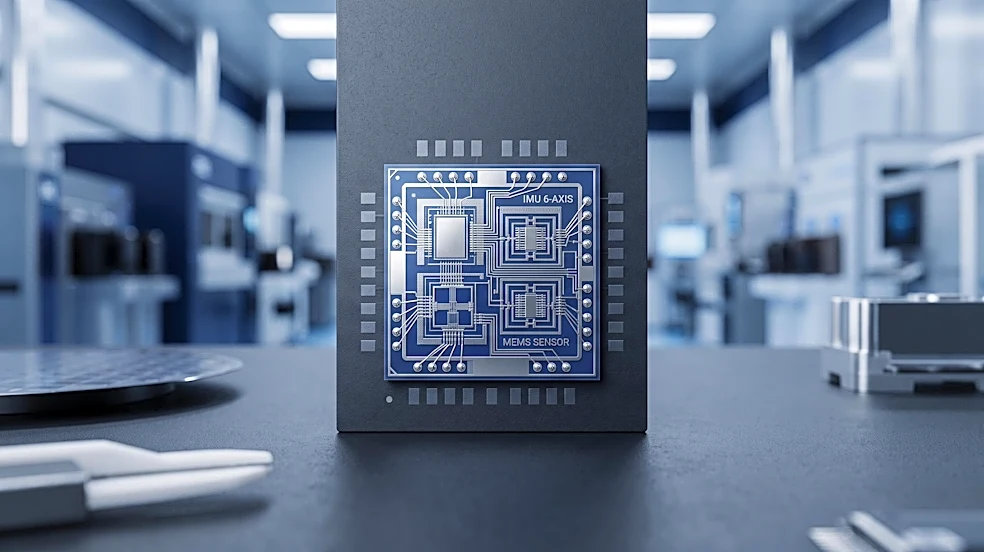
STMicroelectronics has introduced two new six-axis inertial measurement units (IMUs), the LSM6DSK320X and ISM6HGK256X, designed for high-precision motion sensing. These sensors feature advanced event detection, enhanced vibration immunity, and comply
with sustainable-materials requirements, including BPA-free and lead-free standards. The IMUs incorporate a super-symmetric gyroscope architecture to minimize the impact of external vibrations and shocks, thereby improving sensing accuracy. They also utilize a dual-accelerometer design, capable of simultaneously capturing low-range disturbances up to ±16 g and high-impact events up to ±320 g, which prevents measurement interruptions. These capabilities make them suitable for a wide array of applications, from consumer devices like fitness trackers and smart tags to industrial uses such as asset monitoring, robotics, and drones for photography and agricultural surveying. The sensors also integrate ST’s machine-learning core (MLC) for on-sensor processing, which helps reduce system power consumption and computational demands.
Why It's Important?
The introduction of these high-precision motion sensors by STMicroelectronics is significant for several U.S. industries, particularly in the technology and manufacturing sectors. The enhanced accuracy and vibration immunity of these IMUs can lead to more reliable and efficient smart devices, drones, and industrial automation systems. For consumers, this could translate to more precise fitness tracking, improved drone stability for recreational and commercial use, and better performance in various smart applications. In industrial settings, the sensors' ability to detect both subtle and high-impact events can improve accident detection, tool-usage monitoring, and structural-condition monitoring, potentially leading to increased safety and operational efficiency. The integration of a machine-learning core also signifies a trend towards more intelligent edge computing, reducing the reliance on cloud processing and lowering overall system power consumption, which is crucial for battery-powered devices. Furthermore, the adherence to sustainable-materials requirements aligns with growing environmental and regulatory expectations, potentially giving STMicroelectronics a competitive edge in markets increasingly prioritizing eco-friendly components.
What's Next?
STMicroelectronics plans to make evaluation adapter boards for both the LSM6DSK320X and ISM6HGK256X available through its eSTore and distributors by November 2026. This will allow developers and manufacturers to begin integrating and testing these new sensors in their products. The LSM6DSK320X is priced from US$4.60 per unit, and the industrial-grade ISM6HGK256X starts at US$5.10 per unit for orders of 1,000 pieces. The company will also continue to support these sensors with its ST MEMS Studio development environment and additional software libraries for motion analysis, sensor fusion, and context awareness. Feedback from drone technology developers, such as Jay Blackman of Betaflight and Dr. Zebo Zhou of Tianhe (Chengdu), has already highlighted the sensors' benefits, suggesting a strong market reception. The ongoing development and adoption of these sensors are expected to drive innovation in smart applications and unmanned aerial vehicles, with potential for new product launches and advancements in various sectors.
Beyond the Headlines
Beyond the immediate applications, the development of these advanced motion sensors by STMicroelectronics points to broader shifts in technology and manufacturing. The emphasis on sustainable materials reflects a growing industry-wide commitment to environmental responsibility, which could influence supply chains and product design across the U.S. and globally. The integration of machine learning directly into the sensor hardware signifies a move towards more autonomous and intelligent devices, reducing latency and enhancing data privacy by processing information at the source rather than relying solely on cloud-based analytics. This trend could accelerate the development of highly responsive and secure IoT ecosystems. Furthermore, the precision and resilience of these sensors could unlock new possibilities in fields requiring extremely accurate motion data, such as advanced robotics, autonomous vehicles, and even specialized medical devices, pushing the boundaries of what smart technology can achieve. The long-term impact could be a more interconnected, efficient, and environmentally conscious technological landscape.