







What's Happening?
Kyoto, Japan, is highlighted as a city of significant traditional and historical importance, renowned for its legendary temples, bamboo forests, and as the heart of geisha culture. It served as the ancient capital of Japan and is a popular destination
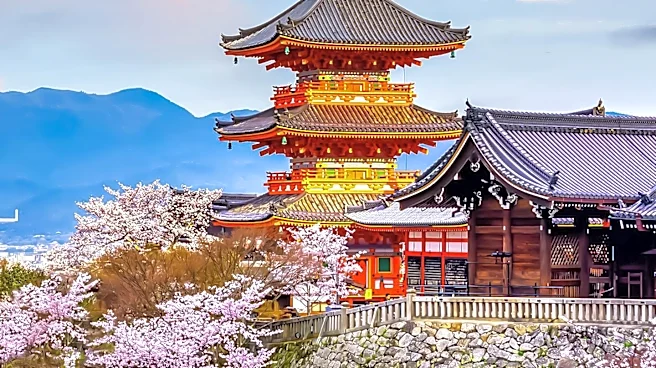
on the 'Golden Route' for first-time visitors, often combined with Osaka and Tokyo. The city presents a distinct contrast to the more modern urban landscapes of Osaka and Tokyo. Key attractions include the iconic Kinkakuji Temple (Golden Pavilion), the serene Arashiyama Bamboo Forest, and various significant temples such as Fushimi Inari Taisha and Kiyomizu-dera. Visitors can also explore unique architectural sites like the Face House, the distinctive Kyoto Gion Post Office, and observe the city's red Toyota Crown Comfort taxis. The city's charm extends to its traditional streets, like Sannenzaka and Ninenzaka, which are beautifully preserved with wooden buildings, offering a glimpse into historic Kyoto.
Why It's Important?
Kyoto's enduring appeal as a cultural and historical hub is crucial for understanding Japan's heritage and its global tourism industry. The preservation of ancient temples, traditional architecture, and geisha culture provides an authentic experience that draws millions of international visitors annually. This influx of tourism supports local economies, including hospitality, traditional crafts, and culinary sectors. The city's emphasis on mindful travel, as promoted by initiatives like KYOTO TOURISTSHIP, helps maintain a balance between visitor enjoyment and resident quality of life, ensuring the sustainability of its cultural assets. The contrast Kyoto offers to modern Japanese cities like Tokyo and Osaka is vital for tourists seeking a diverse understanding of the country, showcasing both its ancient roots and contemporary advancements. The city's ability to blend historical significance with modern amenities, such as its impressive Kyoto Station, makes it a unique and accessible destination.
What's Next?
For visitors planning a trip to Kyoto, a key recommendation is to 'front-load' each day with absolute must-do activities to maximize the experience, given the abundance of attractions. This strategy helps ensure that priority sites like Fushimi Inari or Kinkakuji are visited, even if it means adjusting the itinerary for other less critical spots. Guided tours are available to help navigate the city efficiently, often utilizing a combination of public transport and taxis to cover multiple renowned locations in a single day. Continued efforts to promote respectful tourism, such as guidelines for interacting with geiko and maiko, will likely remain a focus to preserve the city's cultural integrity. Future developments may include further integration of technology to enhance visitor experiences while maintaining the city's traditional ambiance, and ongoing preservation efforts for its numerous UNESCO World Heritage Sites.
Beyond the Headlines
Beyond its surface-level attractions, Kyoto embodies a deeper philosophical and aesthetic significance, particularly through its Zen temples and gardens. These sites offer more than just visual beauty; they provide spaces for contemplation and a connection to centuries of spiritual practice. The city's commitment to preserving its intangible cultural heritage, such as the geisha tradition, highlights a dedication to living history that is increasingly rare globally. The juxtaposition of ancient traditions with modern infrastructure, like the ultra-modern Kyoto Station, reflects Japan's unique ability to honor its past while embracing the future. This blend creates a dynamic cultural landscape where visitors can experience both profound historical depth and contemporary Japanese life. The emphasis on mindful travel also points to a broader global trend towards sustainable and respectful tourism, encouraging visitors to engage with local cultures responsibly.