


What's Happening?
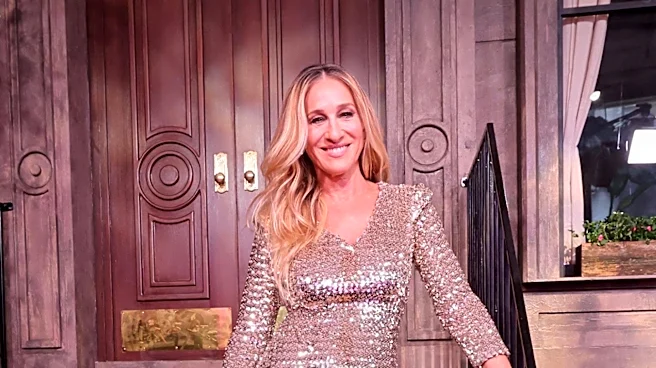
A new study conducted by fashion retailer Kaiia in November 2026 has determined that 'Sex and the City' is the most fashion-obsessed television series. The research analyzed dialogue from 29 TV shows, tracking mentions of 91 fashion brands across their
episodes. 'Sex and the City' led with 2.7 brand mentions per hour, totaling 121 mentions across its 94 episodes. Its sequel, 'And Just Like That…', followed with 2.1 mentions per hour. The study highlighted that while numerous luxury brands like Prada, Gucci, and Chanel appeared, Spanish shoe designer Manolo Blahnik was the most frequently mentioned brand in 'Sex and the City', appearing 15 times. In contrast, Ralph Lauren was the most mentioned brand in the sequel. The research methodology involved individually checking each brand reference and calculating its frequency per hour of viewing.
Why It's Important?
This study underscores the significant role fashion plays in popular culture and its influence on consumer perception and brand recognition. For fashion brands, being featured or mentioned in popular television shows can translate into substantial exposure and desirability, as characters often serve as style icons. The enduring legacy of 'Sex and the City' as a fashion benchmark, even years after its original run, demonstrates the long-term impact of strategic product placement and character association. The findings also provide insights for marketers and content creators on how integrating fashion narratives can enhance character development and audience engagement. The specific mention of Manolo Blahnik highlights the power of a strong character-brand association, as Carrie Bradshaw's affinity for the brand became a defining element of her persona.
What's Next?
The findings of this study could influence future television productions and brand partnership strategies. Content creators might increasingly focus on integrating fashion brands more explicitly into dialogue to enhance character depth and appeal, following the model of 'Sex and the City'. Fashion brands, in turn, may seek out opportunities for organic mentions within popular shows, recognizing the value of such exposure over traditional advertising. This research could also prompt further studies into the economic impact of fashion mentions in media, potentially leading to new metrics for evaluating brand visibility and influence within entertainment. The continued cultural relevance of shows like 'Sex and the City' suggests that their fashion influence will persist, potentially inspiring new generations of viewers and consumers.
Beyond the Headlines
Beyond the immediate findings, this study touches upon the broader cultural phenomenon of aspirational consumption and identity formation through fashion. Television shows often serve as a mirror and a projector of societal values and desires, with fashion acting as a key visual language. The explicit naming of designer brands within dialogue, as noted by a Kaiia fashion expert, efficiently communicates character traits, aspirations, and socioeconomic status without extensive exposition. This linguistic integration of fashion goes beyond mere visual display, embedding brands directly into the narrative fabric. It highlights how media consumption shapes our understanding of luxury, style, and personal expression, reinforcing certain brands as symbols of particular lifestyles or personalities, thereby influencing consumer behavior on a subconscious level.