



What's Happening?
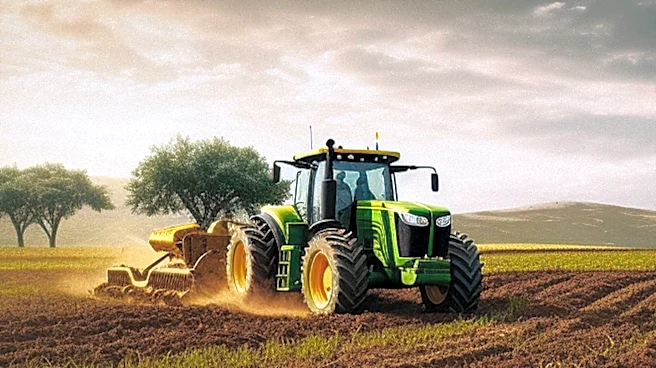
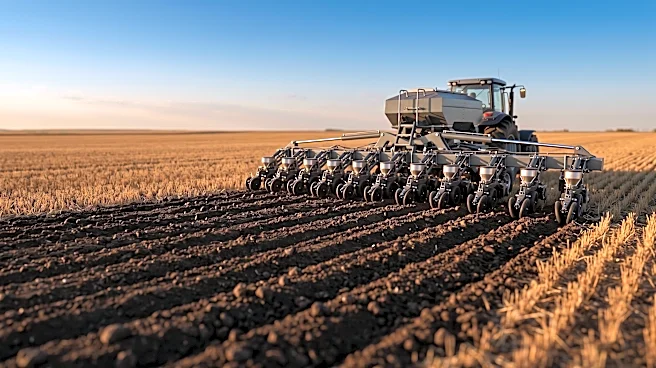
Case IH has introduced an expanded version of its Nutri-Tiller 1000 Series, now available in a 16-row folding, mounted toolbar configuration. This new tillage tool is designed to work seamlessly with the Case IH 2000 Series Early Riser planter, aiming
to improve soil health and optimize planting efficiency. According to David Brennan, planter marketing manager at Case IH, the 1000 Series creates clean, precise strips while leaving a protective layer of residue between rows to prevent soil erosion. It also maximizes nutrient-use efficiency by placing fertilizer directly in the root zone. The integration with the 2000 Series Early Riser planter ensures precise seed placement, consistent depth, and good seed-to-soil contact. Operators can control residue variables from the cab, and the system utilizes FieldOps and Active Implement Guidance to ensure the planter follows the exact path of the strip-till pass, reducing implement drift and potential crop damage.
Why It's Important?
This new offering from Case IH is significant for U.S. farmers as it addresses critical needs in modern agriculture: efficiency, soil health, and sustainability. By combining tillage and planting into a single, integrated system, farmers can cover more acres in less time, reducing fuel costs and labor requirements. The emphasis on improving soil health through precise strip-tillage and residue management aligns with growing environmental concerns and the demand for sustainable farming practices. Enhanced soil health can lead to better water retention, reduced erosion, and increased microbial activity, ultimately boosting crop yields and farm profitability. The precision guidance system minimizes overlap and ensures optimal seed and nutrient placement, which is crucial for maximizing the return on investment in seeds and fertilizers. This technology can help U.S. farmers achieve higher productivity while minimizing their environmental footprint.
What's Next?
The new 16-row Nutri-Tiller 1000 Series is expected to be a key feature at agricultural trade shows, such as the Farm Progress Show in Boone, Iowa, where Case IH will showcase its agronomic solutions. Farmers will have the opportunity to learn more about the integrated system and its benefits. The adoption of this technology by U.S. farmers will likely increase as they seek ways to optimize operations and improve sustainability. Case IH's focus on creating a 'seamless agronomic ecosystem' suggests future developments will continue to integrate various farming processes, from tillage to planting and guidance, into cohesive technological solutions. This could lead to further advancements in autonomous farming equipment and data-driven decision-making tools, transforming how U.S. farms operate in the coming years.
Beyond the Headlines
The integration of advanced tillage and planting technologies like the Nutri-Tiller 1000 and Early Riser planter represents a broader trend towards precision agriculture and smart farming in the U.S. This shift has profound implications for the future of agricultural labor, land management, and environmental policy. As farming becomes more automated and data-driven, the demand for skilled operators capable of managing complex machinery and software will increase. The focus on soil health and reduced chemical inputs could also influence agricultural subsidies and environmental regulations, favoring practices that promote sustainability. Furthermore, the ability to achieve higher yields with fewer resources could contribute to national food security and reduce the pressure to convert natural habitats into farmland. This technological evolution is not just about new equipment; it's about redefining the very nature of farming in the 21st century.