




What's Happening?
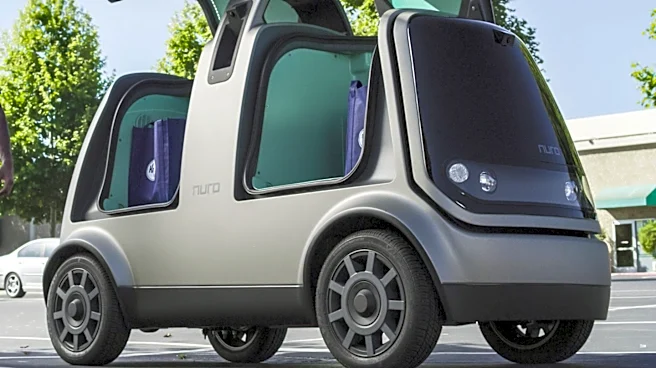
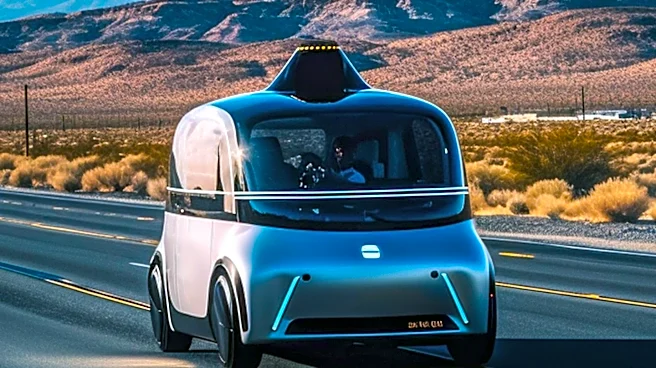
T. Rowe Price suggests that autonomous vehicles (AVs) are on the cusp of a significant commercial breakthrough, akin to the 'ChatGPT moment' for artificial intelligence. The investment firm anticipates that self-driving technology will scale commercially
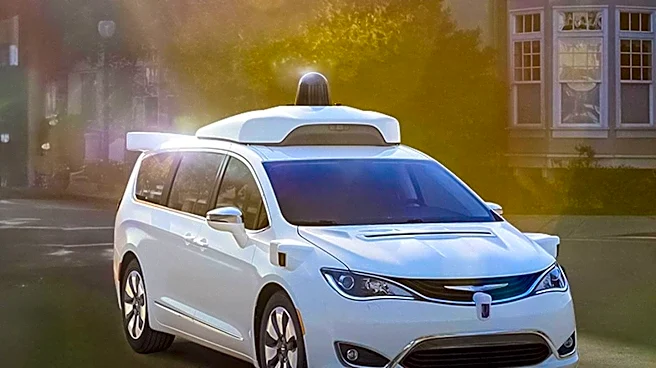
within the next three to five years, becoming one of the largest AI applications. This projection encompasses both robotaxis and long-haul trucking, with eventual expansion into personal vehicles. Despite historical skepticism due to past developmental challenges, T. Rowe Price believes that commercial inflection points for both robotaxis and autonomous trucking will become evident from 2027 onwards. Key players like Waymo are already operating driverless robotaxi fleets in 15 U.S. cities with plans for further expansion, while Aurora Innovation aims to deploy over 1,000 driverless Class 8 trucks by the end of next year. The firm highlights that fleet operators, such as FedEx Freight and Volvo, are increasingly vocal about the readiness of self-driving trucks, with some estimating that nearly 1 in 10 long-haul trucks in the U.S. could be self-driving by 2035.
Why It's Important?
The commercialization of autonomous driving technology holds significant implications for various U.S. industries, particularly transportation and logistics. The value proposition of AVs stems from potential cost savings, increased efficiencies, and enhanced customer experiences through Level 4 autonomy, which allows vehicles to operate without a human driver. For the trucking industry, self-driving trucks can improve fleet productivity by overcoming federal hours-of-service limitations, effectively doubling truck utilization on long routes. This also addresses persistent driver shortages, allowing companies to reallocate human labor to shorter routes. In the robotaxi sector, AVs promise consistent service and expanded availability. The emphasis on safety, with AVs never getting distracted or tired, could drastically reduce accidents, as human error contributes to over 90% of serious crashes. Companies that prioritize robust safety validation and redundant hardware/software architectures, like Waymo and Aurora Innovation, are positioned to gain a competitive advantage, potentially leading to lower insurance premiums for fleet operators.
What's Next?
The coming years are expected to see a rapid increase in the commercial deployment of autonomous vehicles, particularly in robotaxi services and long-haul trucking. As initial deployments prove successful, customer interest among fleet operators is anticipated to grow, driving wider adoption. Regulatory frameworks will likely evolve to accommodate this technology, as highlighted by FedEx Freight's CEO, who views regulation as the primary gating factor for broader deployment. The industry will also likely see continued innovation in sensor technology, with LiDAR and radar costs projected to decline, making multi-sensor arrays more economically viable. This will further enhance the safety and operational capabilities of AVs in diverse conditions. The market is expected to consolidate, with a few first-movers gaining significant market share, similar to the evolution of food delivery and ride-hailing services. Investors will be closely watching for companies that can demonstrate reliable safety records and efficient scaling of their driverless operations.
Beyond the Headlines
The widespread adoption of autonomous vehicles could trigger profound long-term shifts across U.S. society and the economy. Ethically, the responsibility for accidents in a driverless world will continue to be a critical legal and public policy debate, potentially leading to new insurance models and liability laws. The impact on the labor market, particularly for professional drivers, will require strategic planning and retraining initiatives, although T. Rowe Price suggests AVs will augment rather than entirely replace human labor in trucking. Culturally, public trust and acceptance of driverless technology will be crucial, influenced by safety records and public education campaigns. The infrastructure demands for AVs, including charging stations for electric autonomous fleets and maintenance facilities, will also necessitate significant investment and urban planning adjustments. Furthermore, the data generated by millions of autonomous vehicles will create new opportunities and challenges related to data privacy, cybersecurity, and the development of smart city ecosystems.