








What's Happening?
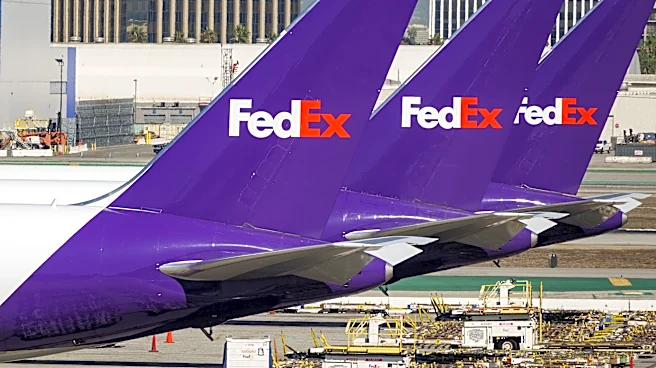
FedEx is showcasing its innovations in smart logistics, sustainable operations, and specialized transportation solutions at the 9th China International Import Expo (CIIE). The company is demonstrating how AI-powered logistics and global connectivity are
enabling global growth, particularly in the context of evolving supply chains and international trade. FedEx's booth features an all-electric autonomous delivery vehicle and an art installation emphasizing sustainability. The company also highlighted its role in transporting giant pandas and high-value, time-sensitive cargo, including advanced manufacturing equipment and healthcare products. According to Poh-Yian Koh, president of FedEx China, the company has grown with China's economy for over four decades, helping businesses access the Chinese market and connecting local enterprises globally. FedEx is investing in its global network, intelligent logistics solutions, and industry expertise to help businesses navigate the new era of international trade, which is being reshaped by AI, digitization, and evolving supply chains.
Why It's Important?
The emphasis on AI-powered logistics and global connectivity by a major player like FedEx underscores a significant shift in how international trade and supply chains are managed. For U.S. businesses, this development highlights the increasing importance of adopting advanced technological solutions to maintain competitiveness in global markets. The focus on resilient supply chains, as noted by FedEx, is crucial for mitigating disruptions and ensuring the smooth flow of goods, which directly impacts U.S. import and export operations. The growth in China's total goods trade, as reported by the General Administration of Customs of China (GACC), indicates a robust market that U.S. companies can tap into, provided they have efficient and reliable logistics partners. FedEx's continued investments in its network and capabilities, including strengthening connections between Guangzhou and key Asia-Pacific markets, facilitate easier access for U.S. businesses to these growing regions, potentially boosting U.S. economic interests through increased trade and market penetration.
What's Next?
FedEx plans to continue expanding its network and service capabilities in China, including strengthening connections with key Asia-Pacific markets and enhancing air cargo network capabilities through strategic partnerships. The company will also further advance its digital and AI-enabled logistics by leveraging automation and digital technologies to improve visibility, efficiency, and reliability in cross-border logistics. This includes developing intelligent customs declaration capabilities and advanced automation at its facilities. Furthermore, FedEx is committed to driving sustainable operations, with ongoing initiatives such as expanding vehicle electrification and supporting environmental programs. These efforts are aimed at helping businesses navigate the complexities of global trade, build smarter and more resilient supply chains, and unlock new growth opportunities in an increasingly interconnected world.
Beyond the Headlines
The narrative presented by FedEx at the CIIE points to a broader trend of technological integration and sustainability becoming central to global commerce. The deployment of AI and autonomous vehicles in logistics raises questions about the future of labor in the transportation sector and the ethical implications of increased automation. The commitment to sustainability, exemplified by electric vehicle fleets and solar power projects, reflects a growing corporate responsibility movement that could influence regulatory frameworks and consumer expectations globally, including in the U.S. The focus on resilient supply chains also highlights the geopolitical vulnerabilities exposed by recent global events, pushing companies to invest in more robust and adaptable logistics networks. This strategic shift could lead to a re-evaluation of global manufacturing and distribution models, potentially impacting U.S. industrial policy and trade agreements.