



What's Happening?
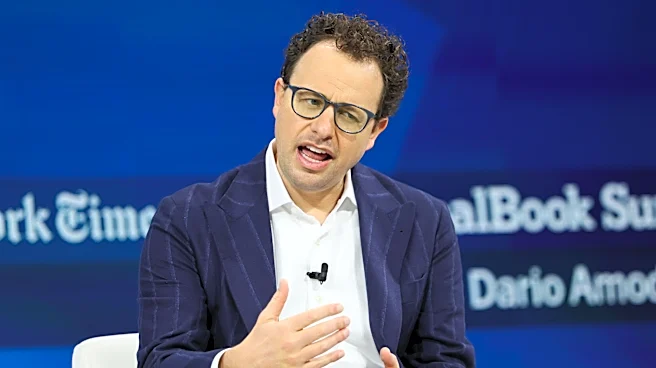
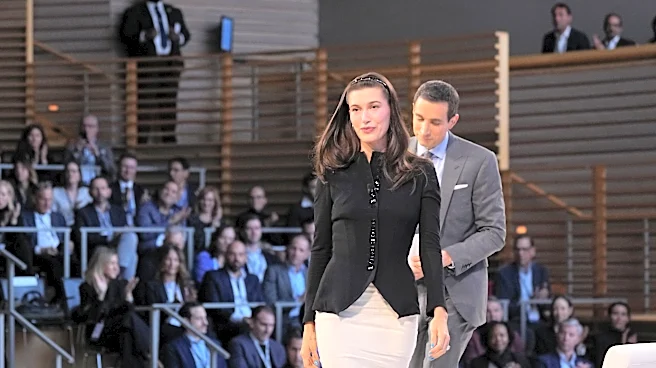
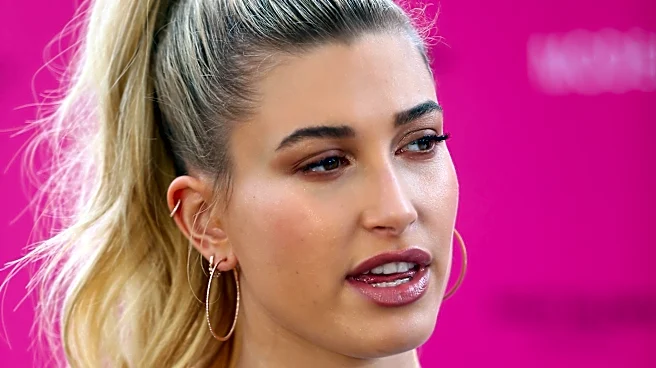
Hailey Bieber, founder of the skincare brand Rhode, has drawn significant online criticism following her interview with journalist Andrew Ross Sorkin at the 2026 DealBook Summit in New York. The interview, which took place on November 18, focused on the development
of Rhode, its sale to e.l.f. Beauty, and Bieber's management of public attention. A viral social media discussion emerged after the interview, with many viewers questioning Bieber's preparedness for serious business questions, particularly regarding her company's billion-dollar valuation. During the discussion, Sorkin inquired if she had always intended to sell Rhode for $1 billion, to which Bieber responded that it was her minimum price. When pressed on her confidence in achieving such a high valuation, she attributed it to 'optimistical delusion,' a term that further fueled online debate. Critics suggested Bieber appeared more comfortable with casual celebrity conversations than with in-depth business inquiries, with one widely circulated comment stating, 'She thought this was a podcast.'
Why It's Important?
This event highlights the ongoing public scrutiny faced by celebrity entrepreneurs and raises questions about the expectations placed on them in business forums. The debate surrounding Bieber's interview underscores a broader discussion about how celebrity status intersects with business credibility. While some defended Sorkin's journalistic approach, arguing that business owners should be prepared to justify significant deals, others felt his questioning was overly direct or uncomfortable. This incident could influence how celebrity founders prepare for public business discussions, potentially leading to more rigorous media training or a more cautious approach to high-profile interviews. It also reflects a public desire for transparency and substance from individuals leveraging their fame in the business world, indicating that celebrity endorsement alone may not be sufficient to satisfy public and media expectations regarding business acumen.
What's Next?
The ongoing online discussion is likely to continue shaping public perception of Hailey Bieber as a business leader and could influence future media engagements for other celebrity entrepreneurs. Bieber may face increased pressure to demonstrate her business expertise more explicitly in subsequent public appearances or through strategic communications from Rhode and e.l.f. Beauty. The incident could also prompt a re-evaluation of interview strategies by event organizers like the DealBook Summit, as they navigate the balance between engaging high-profile figures and maintaining the rigor of business discussions. Furthermore, other celebrity-founded brands might observe this reaction and adjust their public relations and founder positioning strategies to better prepare for critical business inquiries, aiming to project a more robust understanding of their ventures beyond their personal brand.
Beyond the Headlines
The controversy surrounding Hailey Bieber's interview delves into deeper implications regarding the intersection of celebrity culture, entrepreneurship, and media accountability. It raises questions about the perceived authenticity of celebrity-led businesses and the public's demand for substance over superficiality. The 'optimistical delusion' comment, while intended to convey ambition, inadvertently sparked a debate about the foundational understanding of business valuation and strategy among celebrity founders. This event could contribute to a broader cultural shift where the public and media become more critical of celebrity ventures, demanding a higher standard of business knowledge and transparency. It also highlights the evolving role of business journalism in holding prominent figures accountable, regardless of their celebrity status, and challenges the notion that fame alone can insulate individuals from rigorous questioning in professional contexts.