




What's Happening?
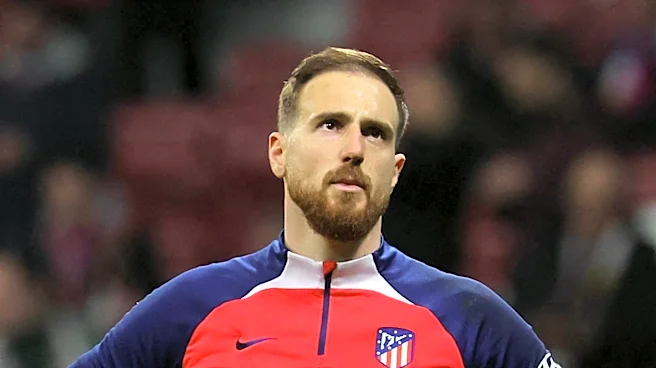
Atlético de Madrid is actively planning for the eventual succession of their veteran goalkeeper, Jan Oblak. Despite Oblak, 33, being under contract until June 2028 and consistently performing as a key player, the club's hierarchy recognizes the need for long-term
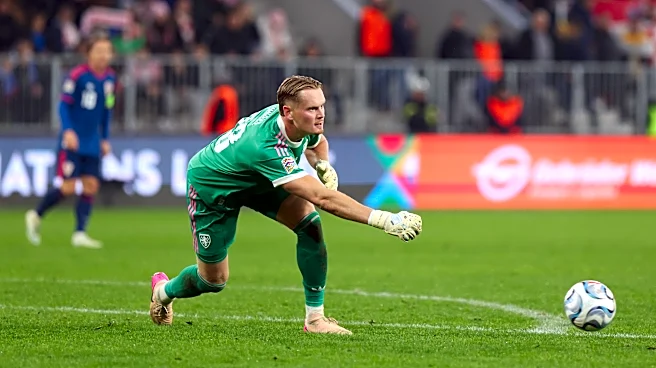
strategic planning for their first-choice keeper position. The sporting department is currently monitoring young talents who could potentially become the team's future number one. Among the names being considered are Santiago Beltrán, a 22-year-old Argentine goalkeeper from River Plate, and Sebastián Jaume, a 22-year-old Uruguayan goalkeeper from Albion FC. Both players fit Atlético's desired profile of youth, potential for development, and a willingness to join without immediately demanding a starting role. The club's intention is to find a goalkeeper who can spend a season learning from Oblak's experience before taking on the primary responsibility, indicating a planned transition rather than an immediate replacement.
Why It's Important?
This proactive approach by Atlético de Madrid highlights a significant trend in top-tier professional sports: the strategic planning for player transitions, especially for iconic figures. Jan Oblak has been a cornerstone for Atlético since 2014, making 554 competitive appearances and winning six Zamora Trophies, making him a club legend. His legacy underscores the difficulty in finding a suitable replacement, emphasizing the importance of a well-thought-out succession plan. For the club, this strategy aims to ensure continuity and stability in a critical position, mitigating the risks associated with the departure of a long-serving star. For the identified young talents, it represents a significant opportunity to join a major European club and develop under the guidance of one of the world's best goalkeepers, potentially shaping their careers for years to come. This also reflects a broader shift in football club management towards sustainable squad building rather than reactive recruitment.
What's Next?
Atlético de Madrid's sporting department will continue to monitor Santiago Beltrán and Sebastián Jaume, along with other potential candidates. Given that both Beltrán and Jaume have contracts expiring in December 2027, the next summer transfer window could be a crucial period for Atlético to make moves. The club's strategy involves bringing in a young goalkeeper who can integrate into the squad and train alongside Oblak for at least a season. This would allow the successor to adapt to the team's system, learn from Oblak's experience, and gradually prepare for the demanding role of a first-choice goalkeeper at a top club. The focus will be on a smooth transition, ensuring that when Oblak eventually moves on or retires, the team has a well-prepared and capable replacement ready to step in, maintaining the team's competitive edge.
Beyond the Headlines
The meticulous planning for Jan Oblak's successor by Atlético de Madrid extends beyond simple player recruitment; it reflects a sophisticated understanding of team dynamics and legacy management in professional sports. Replacing a player of Oblak's stature, who holds the second-most appearances in club history, is not just about finding another talented goalkeeper but about preserving the team's identity and performance standards. This approach minimizes disruption and fosters a culture of mentorship, where established stars contribute to the development of future generations. Ethically, it demonstrates a commitment to long-term club health over short-term fixes. Legally, the timing of potential transfers, considering contract expiry dates, showcases strategic financial management. Culturally, it reinforces the idea that even legends are part of a larger, evolving institution, ensuring the club's enduring success beyond individual contributions.