




What's Happening?
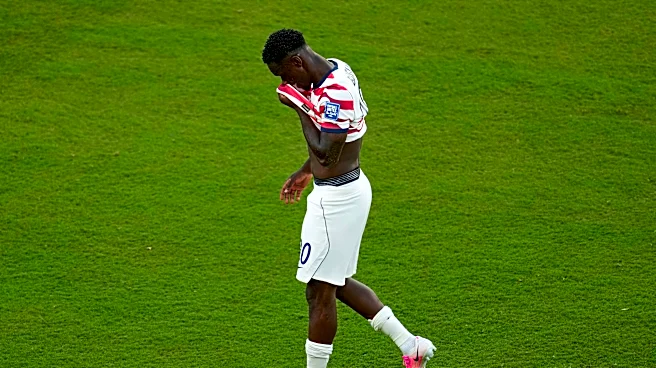
The United States Men's National Team (USMNT) is facing a challenging situation in their World Cup Round of 16 match against Belgium due to a controversial decision by FIFA. The issue revolves around Folarin Balogun, a key player for the USMNT, who was
initially set to miss the match due to a red-card suspension. However, FIFA overturned this suspension, allowing Balogun to play. This decision has sparked debate, as it is the first time in 64 years that such a suspension has been avoided at the World Cup. The situation has created a lose-lose scenario for the USMNT. If Balogun plays and the U.S. wins, the victory may be seen as tainted due to the unusual FIFA decision. Conversely, if the U.S. loses with Balogun on the field, critics may argue that FIFA's attempt to assist the U.S. was ineffective.
Why It's Important?
This development is significant as it highlights the influence of FIFA's decisions on the integrity of the World Cup. The controversy surrounding Balogun's eligibility to play could impact perceptions of fairness in international soccer competitions. For the USMNT, the situation presents a dilemma, as any outcome could be viewed negatively. A win might be perceived as undeserved, while a loss could be seen as a failure despite FIFA's intervention. This scenario underscores the complexities of sports governance and the potential for decisions to affect team morale and public perception. The outcome of this match could have lasting implications for the USMNT's reputation and FIFA's credibility.
What's Next?
The match against Belgium will proceed with Balogun eligible to play, and the result will likely influence future discussions about FIFA's decision-making processes. Stakeholders, including fans, analysts, and other national teams, will be closely watching the outcome and its aftermath. Depending on the result, there may be calls for FIFA to review its policies regarding red-card suspensions and appeals. The USMNT will need to navigate the public and media scrutiny that follows, regardless of the match's outcome. This situation may also prompt broader discussions about transparency and consistency in sports governance.