






What's Happening?
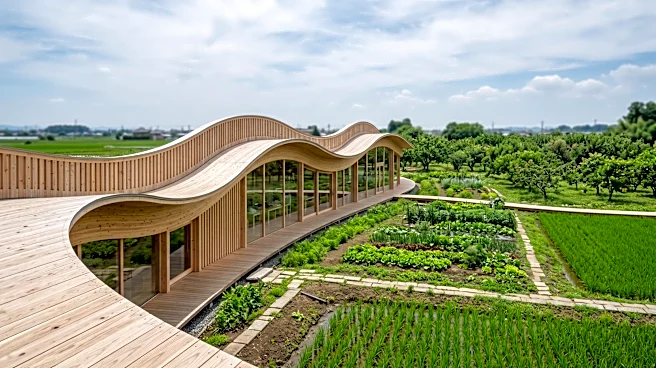
UENOA Architects have designed the YUKI Office headquarters in Kuki, Japan, integrating a working landscape that includes a rice paddy, vegetable plots, and an orchard directly into the office environment. The design features three curving walls made
of hinoki CLT (Cross-Laminated Timber) that define the building and its surrounding productive spaces. This approach allows for seasonal cultivation, such as the growth and harvest of rice, to be visible from various parts of the office, including covered paths and glazed communal rooms. The landscape is not merely decorative but forms an integral part of the office's daily operation, with harvested produce like onions, garlic, and rice dried under the eaves.
Why It's Important?
This innovative architectural approach challenges traditional office design by blurring the lines between workspace and agricultural land. For U.S. businesses and urban planners, this model presents a compelling case for integrating green infrastructure and local food production into commercial developments. It highlights potential benefits such as improved employee well-being through connection to nature, enhanced sustainability through on-site food sourcing, and even emergency preparedness, as the rice grown on-site serves as a reserve. This concept could influence future U.S. urban planning and corporate campus designs, promoting more resilient and environmentally conscious development strategies. It also demonstrates a shift towards valuing productive landscapes as essential components of modern infrastructure.
What's Next?
The YUKI Office model could inspire similar projects globally, prompting architects and developers to consider the integration of productive landscapes in commercial and residential buildings. Future trends might see an increase in urban farming initiatives directly linked to workplaces, potentially leading to new zoning regulations or incentives for such designs in the U.S. The success of this project in Japan could also encourage further research into the psychological and environmental benefits of such integrated systems, influencing corporate social responsibility initiatives and employee engagement programs. The concept of a building serving as both a workplace and a resource for food and emergency supplies may become a more prominent consideration in sustainable development.
Beyond the Headlines
The YUKI Office design goes beyond mere aesthetics, offering a profound commentary on the relationship between humans, work, and nature. By embedding agricultural cycles into the daily routine of an office, it reintroduces a sense of seasonality and connection to the land that is often lost in modern urban environments. This approach raises ethical questions about corporate responsibility towards environmental stewardship and employee well-being. It also subtly critiques the conventional separation of work from the natural world, suggesting a more harmonious and sustainable future where productive landscapes are not just outside the city, but woven into its very fabric. The use of hinoki CLT further emphasizes a commitment to sustainable materials and construction practices.