






What's Happening?
Despite recent gold price volatility, with the metal dipping below $4,000/oz after reaching an all-time high above $5,500/oz earlier in the year, institutional investors are maintaining a bullish long-term outlook. While American investors have shown
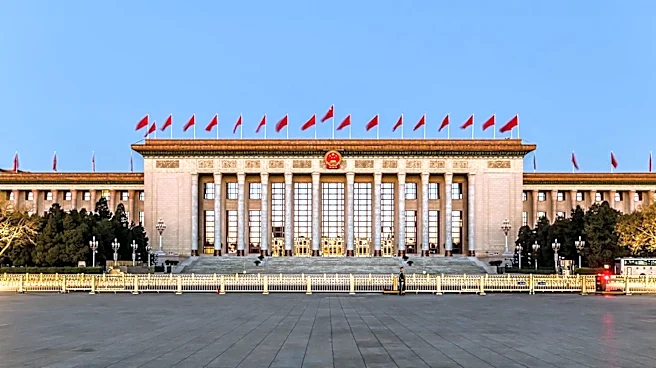
caution, with U.S. gold purchases remaining significantly below historical levels, Chinese buyers have actively accumulated bullion at lower prices. Trading volume on the Shanghai Gold Exchange reached approximately 430 tonnes in a single week, indicating strong demand from China. Major financial institutions like RBC Capital Markets forecast gold prices reaching $5,296 an ounce by 2027, and State Street's Aakash Doshi projects a long-term outlook of $10,000 an ounce. These long-term forecasts are driven by factors such as rising government debt, continued central bank demand, currency and inflation risks, and global geopolitical uncertainty. Experts advise against trying to perfectly time market bottoms, suggesting a strategy of consistent purchases to average out costs over time.
Why It's Important?
The divergence in investor behavior, with Chinese buyers actively accumulating gold while American investors remain cautious, highlights differing perceptions of market opportunities and risk. This trend could influence global gold demand dynamics and pricing. The strong long-term bullish outlook from major institutions, despite short-term price corrections, signals confidence in gold's enduring role as a store of value and hedge against economic instability. For U.S. investors, this suggests that focusing on long-term portfolio goals, such as wealth preservation, inflation protection, and diversification, might be more prudent than attempting to time market fluctuations. The underlying factors cited by institutions—government borrowing, central bank demand, and global uncertainty—underscore systemic economic and geopolitical risks that could drive sustained demand for gold, impacting its role in investment strategies and potentially influencing broader financial stability.
What's Next?
As gold prices fluctuate, investors are advised to consider long-term strategies rather than attempting to time market bottoms. The adage 'Don't wait to buy gold; buy gold and wait' is being emphasized by industry experts. Institutional forecasts suggest continued upward trajectory for gold in the coming years, driven by macroeconomic factors. The upcoming midterm elections in the U.S. are not expected to have a consistent direct impact on gold prices, but subsequent economic, fiscal, and monetary policies could be more influential. Investors may increasingly adopt dollar-cost averaging strategies, making regular purchases to mitigate volatility and build long-term positions. The ongoing accumulation by central banks and the persistent global economic uncertainties are expected to continue providing a floor for gold prices and support its long-term appreciation.
Beyond the Headlines
The contrasting behavior between Chinese and American gold investors could reflect differing cultural attitudes towards wealth preservation and risk, as well as varying levels of confidence in their respective domestic economies and currencies. The institutional focus on long-term drivers like government debt and central bank demand points to a growing concern about the sustainability of current fiscal and monetary policies globally. This suggests a deeper underlying shift in the perception of fiat currencies and traditional financial assets, potentially leading to a broader re-evaluation of gold's role in the global financial system. The emphasis on gold as a hedge against currency debasement and inflation highlights a growing distrust in conventional economic management, which could have long-term implications for monetary policy and international finance.