



What's Happening?
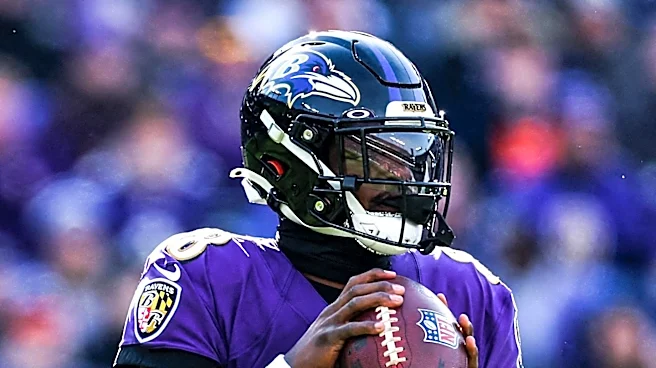
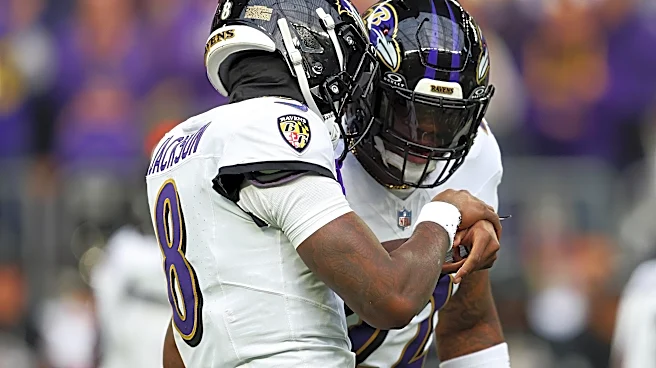
ESPN's Aaron Schatz has criticized the Baltimore Ravens regarding the structure of quarterback Lamar Jackson's contract, specifically highlighting its impact on the team's 2027 salary cap. Jackson, a two-time NFL MVP, signed a five-year, $260 million
extension before the 2023 season, making him the highest-paid player in NFL history at the time. However, Schatz points out that the contract is heavily backloaded, resulting in an 'astonishing' $84.3 million cap number for Jackson in 2027. This makes the Ravens currently have the least cap space for 2027, needing to cut $41.5 million to comply with the cap. The situation is complicated by Jackson representing himself without an agent, which has reportedly hindered previous extension negotiations. The Ravens were considered Super Bowl contenders in 2025 but missed the playoffs due to injuries, with Jackson missing at least four games in three of the past five seasons, raising durability concerns.
Why It's Important?
The financial implications of Lamar Jackson's contract are significant for the Baltimore Ravens' long-term competitiveness and roster construction. The substantial cap hit in 2027 could severely limit the team's ability to retain key players, sign free agents, or make strategic trades, potentially forcing them to shed valuable talent. This situation underscores the complexities of managing high-value player contracts in the NFL, especially with players who negotiate without agents. The ongoing contract uncertainty could also create instability within the organization and affect team morale. Furthermore, concerns about Jackson's durability, as noted by ESPN's Jeremy Fowler, add another layer of risk to the team's investment, potentially influencing future contract negotiations and the team's overall strategy for managing their star quarterback.
What's Next?
The Baltimore Ravens face the immediate challenge of negotiating a new extension with Lamar Jackson to alleviate the impending 2027 cap crisis. According to Schatz, an extension is the primary way to manage Jackson's high cap number, but past difficulties in reaching a deal suggest this will not be straightforward. The team will need to find common ground with Jackson, who represents himself, to restructure his contract and free up cap space. Failure to do so could lead to difficult roster decisions, potentially forcing the team to part ways with other key players or even consider drastic measures regarding Jackson's future with the team, though this is presented as a less desirable outcome for Baltimore. The team's performance in the upcoming season, particularly Jackson's health and on-field production, will likely influence the urgency and terms of any future negotiations.
Beyond the Headlines
The situation with Lamar Jackson's contract highlights a growing trend in professional sports where star athletes, particularly in the NFL, are increasingly opting to negotiate contracts without traditional agents. While this approach can potentially maximize a player's earnings by eliminating agent fees, it also places the burden of complex financial and legal negotiations directly on the athlete. This can lead to unique contract structures, like Jackson's backloaded deal, which may create unforeseen challenges for both the player and the team down the line. The public scrutiny of Jackson's contract and his perceived commitment, as suggested by Mike Preston of The Baltimore Sun regarding practice habits and off-field conduct, also touches on the broader narrative surrounding athlete accountability and the immense pressure placed on franchise players to perform and lead both on and off the field.