
What's Happening?
In-store technologies are increasingly utilizing the Internet of Things (IoT) to enhance customer behavior tracking and operational efficiency in retail environments. These technologies include heat maps and foot traffic sensors that provide insights
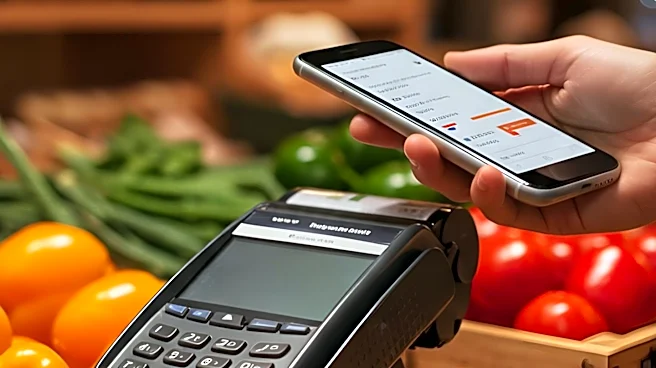
into customer movements, allowing stores to optimize inventory placement and layout. Autonomous retail agents and AI-driven systems are becoming essential for real-time decision-making. Additionally, battery-free sensing and ambient IoT sensors facilitate large-scale deployment, while electronic shelf labels enable instant pricing updates. Supply chain tracking with GPS and environmental sensors ensures product quality and handling efficiency. Proximity marketing using Bluetooth beacons delivers personalized deals to shoppers' phones, enhancing customer engagement. Companies like Albertsons and Bob’s Discount Furniture are integrating AI and machine learning to improve supply chain forecasting, inventory management, and customer experience.
Why It's Important?
The integration of IoT in retail is significant as it addresses long-standing challenges such as inventory distortion, which has historically led to revenue losses. By providing real-time data and insights, IoT technologies enable retailers to make informed decisions, optimize operations, and enhance customer satisfaction. This technological shift is crucial for maintaining competitiveness in the retail sector, as it allows businesses to respond swiftly to market demands and consumer preferences. The ability to track inventory accurately and engage customers with personalized marketing can lead to increased sales and customer loyalty. Furthermore, the adoption of IoT solutions can streamline supply chain operations, reducing waste and improving product quality.