
What's Happening?
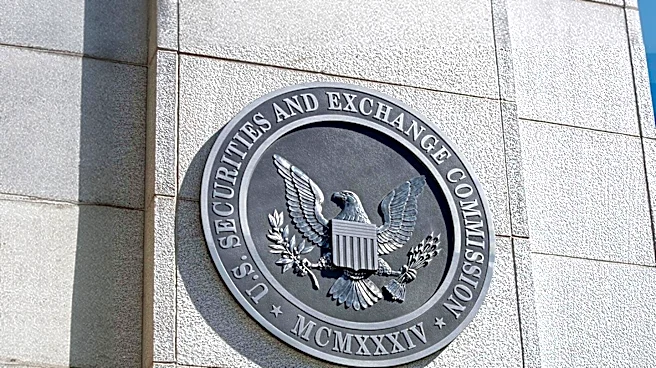
On November 4, 2026, the U.S. Securities and Exchange Commission (SEC) adopted significant amendments to the rules defining which investment advisers and investment companies qualify as "small entities"
under the Regulatory Flexibility Act (RFA). These changes mark the first update to these asset-based thresholds in nearly 30 years, aiming to better reflect the growth of the modern asset management market. For investment advisers, the threshold for Regulatory Assets Under Management (RAUM) to be classified as a "small entity" has increased from $25 million to $1 billion. For investment companies and funds, the net asset threshold has been raised from $50 million to $10 billion. The SEC also updated how related funds' assets are aggregated and eliminated the separate total assets test for investment advisers. To prevent future lags, the SEC will now implement inflation adjustments to these thresholds every 10 years.
Why It's Important?
This modernization of "small entity" definitions is crucial because it legally compels the SEC to consider the economic impact of its proposed rules on a much broader segment of the investment industry. By expanding the definition to include firms with up to $1 billion in RAUM, the SEC's economic models will now have to account for the realities of mid-sized and boutique firms, which previously fell outside the outdated definition. This means that future regulations are more likely to integrate accommodations for these firms, such as staggered compliance timelines, reduced reporting frequencies, or even full regulatory exemptions. This shift could significantly reduce compliance burdens for a substantial portion of the industry, as compliance costs do not scale proportionally with firm size. Failure by the SEC to properly account for the economic impact on this newly expanded group of small entities could lead to future rules being challenged or struck down in federal court under the Administrative Procedure Act (APA).
What's Next?
While these amendments do not impose immediate operational or compliance mandates, they signal a prospective shift in the SEC's economic forecasting and rulemaking approach. The SEC will implement immediate conforming changes to Form ADV to align data collection with the new definitions. The Division of Examinations may also realign its internal risk-scoring matrices, potentially affecting how firms under the new $1 billion threshold are selected or prioritized for routine examinations. There is also a potential for state securities regulators, such as the North American Securities Administrators Association (NASAA), to adjust their own frameworks or coordination thresholds with the SEC, given the new federal baseline for "small entities." This could lead to a more harmonized regulatory landscape between federal and state levels for mid-sized advisers. Overall, the SEC will be legally obligated to rigorously analyze the disproportionate effects of proposed rules on a larger group of smaller and mid-sized firms, potentially leading to more tailored regulations and compliance options.
Beyond the Headlines
The SEC's decision to update its "small entity" definitions after nearly three decades highlights a broader recognition of the evolving financial landscape and the need for regulatory frameworks to adapt. This move reflects a philosophical shift towards more nuanced regulation that acknowledges the diverse operational capacities within the investment advisory sector. Beyond the immediate economic implications, this could foster a more competitive environment by reducing barriers to entry and operational costs for smaller firms, potentially encouraging innovation and diversification in financial services. However, it also places a greater responsibility on the SEC to conduct thorough and accurate Regulatory Flexibility Analyses, ensuring that the benefits of tailored regulation outweigh any potential risks of creating loopholes or uneven enforcement. The periodic inflation adjustments are a critical long-term measure to prevent future regulatory obsolescence, ensuring the framework remains relevant in a dynamic economy.