

What's Happening?
A new training approach emphasizes improving core strength and thoracic mobility through specific exercises. This method highlights the interconnectedness of mobility and rotational strength, suggesting that a lack of upper back rotation can lead to compensatory
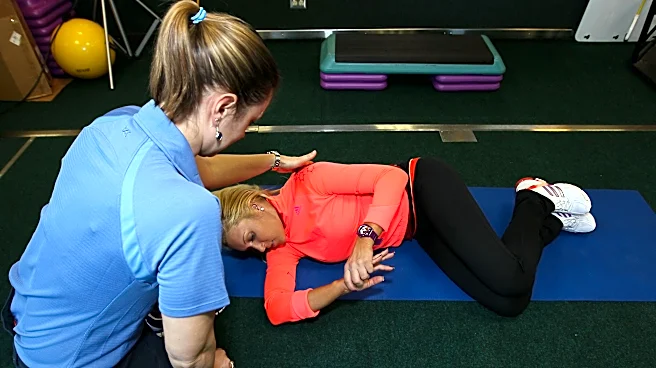
movements in the lower back or rib flaring. The training progression involves creating space, mobilizing, and then loading through rotation. Exercises like Rockback Breathing with Diagonal Reach, Thread the Needle with Overhead Reach, and the Half-Kneeling Cable Chop are recommended. These exercises aim to build core strength that translates into real-world movement by training the obliques and oblique slings, which connect the upper and lower body and control rib cage position. The goal is to ensure rotation originates from a mobile upper back rather than causing strain elsewhere.
Why It's Important?
This training philosophy is crucial for individuals seeking to improve functional movement and prevent injuries. By addressing thoracic mobility and core strength, it can mitigate common issues such as lower back pain, pelvic floor heaviness, and neck tightness, which often arise from compensatory movement patterns. For athletes and active individuals, enhanced rotational strength and mobility can lead to better performance in activities requiring dynamic movement, such as lifting, reaching, and carrying. The focus on proper breathing mechanics and rib cage expansion also contributes to overall core stability, which is fundamental for executing various exercises and daily tasks safely and effectively. This approach offers a structured way to build a more resilient and adaptable body.
What's Next?
Individuals can integrate these exercises into their existing fitness routines. The first two exercises, Rockback Breathing and Thread the Needle, can serve as warm-ups before strength training or as standalone mobility work. The Half-Kneeling Cable Chop can be incorporated into strength sessions to load and train rotational movements. The 'Lift with Emily' app offers programmed mobility, breathing, and rotational strength training for those looking for a structured plan. Consistent application of these principles is expected to lead to improved core connection and movement efficiency in various physical activities.
Beyond the Headlines
The emphasis on the 'rib-pelvis stack' and the role of the diaphragm in core pressure management points to a deeper understanding of biomechanics. This approach moves beyond superficial core exercises to address the foundational elements of stability and movement. It suggests that many common physical discomforts and limitations stem from inefficient breathing patterns and restricted thoracic movement, rather than just weak muscles. By restoring natural movement and breath mechanics, this training can foster a more intuitive and pain-free relationship with one's body, potentially reducing reliance on corrective therapies for chronic issues.