


What's Happening?
Former BBC producer Gareth Davies, who has worked with numerous prominent female pop singers, recently shared anecdotes about celebrity demands and behaviors during his time in the industry. Davies identified Shania Twain as 'one of the biggest divas'
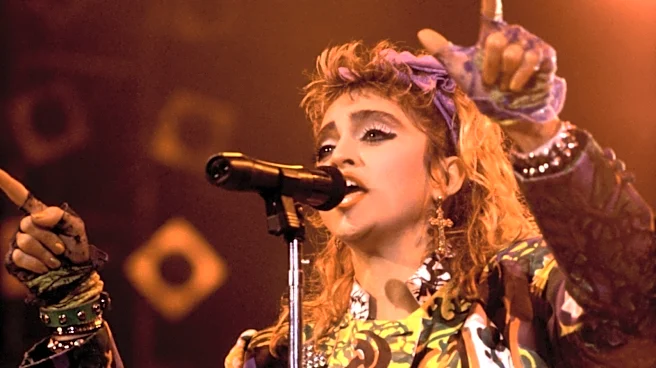
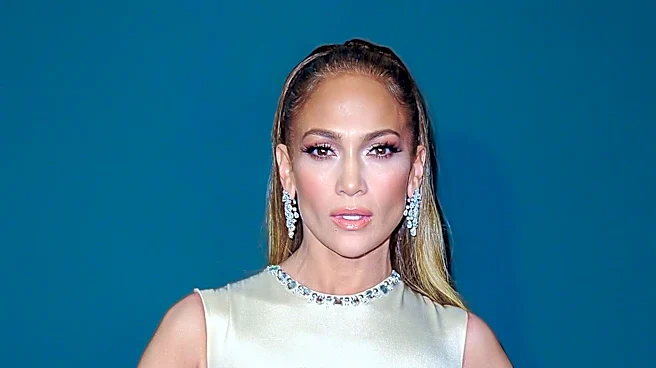
he encountered, recalling an instance where her entourage reportedly ran ahead to open doors for her on the set of 'Top of the Pops.' He also described Jennifer Lopez as the 'sassiest' celebrity, detailing her specific requests for all-white dressing rooms, which involved covering entire corridors with white plastic film, and a white microphone for her performances. Davies noted that these demands required significant time, money, and effort to fulfill. He also mentioned Madonna arriving with a large entourage, contrasting this with artists like Macy Gray who appeared alone.
Why It's Important?
These revelations offer a rare glimpse into the behind-the-scenes dynamics of the entertainment industry, particularly the power and influence wielded by top-tier celebrities. The detailed accounts of specific demands, such as all-white dressing rooms or door-opening entourages, highlight the extensive resources and logistical efforts involved in accommodating high-profile artists. This insight is important for understanding the operational complexities and financial implications within the music and television production sectors. It also sheds light on the perceived 'diva' persona often associated with celebrities, illustrating how such reputations can be formed through specific behaviors and requests. For aspiring artists and industry professionals, these stories provide a cautionary tale or a benchmark for the expectations that can arise at the pinnacle of fame.
What's Next?
While Davies's recollections are historical, they contribute to the ongoing public discourse about celebrity culture and the expectations placed on and by famous individuals. Such anecdotes often resurface in media, influencing public perception of these artists and potentially shaping future interactions between celebrities and production teams. The discussion around 'diva' behavior can lead to broader conversations within the industry about professionalism, collaboration, and the balance between artistic demands and practical realities. Although no immediate actions are expected from these past events, the sharing of these stories by industry insiders continues to inform public and professional understanding of the entertainment world's inner workings, potentially influencing how new talent is managed and how established stars are perceived.
Beyond the Headlines
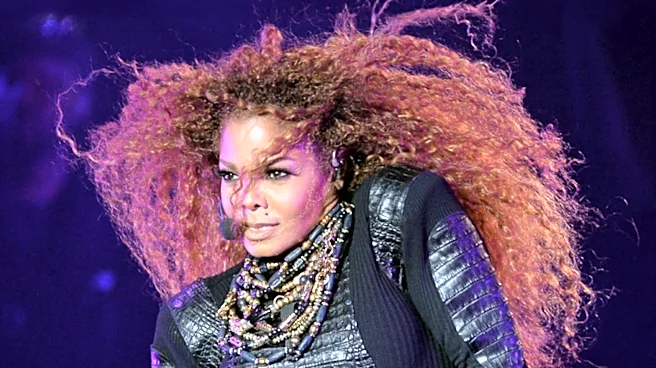
Davies's accounts delve into the psychological aspects of fame and power, where celebrities' demands can be seen as manifestations of control, comfort, or a desire to maintain a specific image. The 'all-white' dressing room for Jennifer Lopez, for instance, could be interpreted as a need for a pristine, controlled environment amidst the chaos of production, or a symbolic representation of her brand. The contrast between artists like Shania Twain and Jennifer Lopez, who made specific demands, and others like Janet Jackson, who was described as surprisingly down-to-earth, highlights the diverse personalities and approaches within the celebrity sphere. These stories also underscore the often-unseen labor and coordination required to support a celebrity's public appearance, revealing the intricate ecosystem that sustains the entertainment industry beyond the spotlight.