





What's Happening?
RTX Corporation, through its subsidiary Pratt & Whitney, is investing $25 million to expand its engine parts manufacturing facility in Niepołomice, Poland. This project, valued at approximately PLN 95 million, aims to increase production capacity for
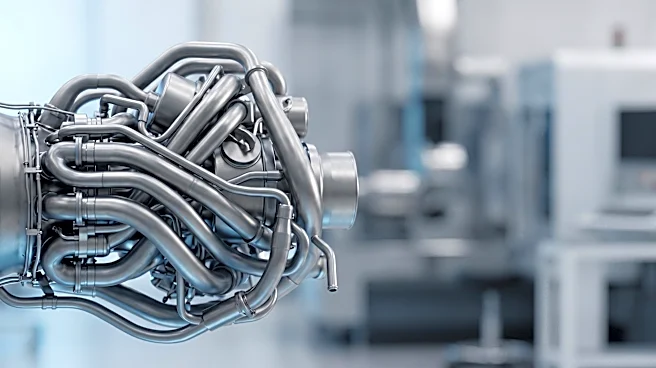
complex tubular assemblies used in commercial and military engine programs, including GTF, PW800, and F135 engines. The expanded facility is projected to become operational by 2028 and is expected to create over 120 new jobs. This investment is supported by the Polish Investment Zone Programme and follows a recently announced $100 million expansion in Rzeszow, Poland. Poland remains RTX's largest investment and employment base outside the United States, with more than 9,500 employees across the country. RTX operates aerospace and defense businesses, with Pratt & Whitney developing and manufacturing aircraft engines and related systems for commercial and military customers.
Why It's Important?
This investment by RTX is significant for several reasons. Firstly, it underscores the growing demand in both the commercial aerospace and defense sectors for advanced engine components, indicating a robust market outlook for these industries. The expansion will enhance RTX's manufacturing capabilities, allowing it to meet increasing global demand for its GTF, PW800, and F135 engines, which power a range of aircraft from commercial airliners to the F-35 Lightning II fighter jet. Secondly, the creation of over 120 new jobs in Poland highlights the economic impact of such investments, contributing to local employment and potentially fostering further technological development in the region. For the U.S., this strategic expansion in a key allied nation like Poland helps solidify supply chains for critical defense components and supports international partnerships in aerospace manufacturing. The move also reflects RTX's strategy to leverage international manufacturing bases to optimize production and cost efficiencies, while maintaining its position as a critical supplier in the global aerospace and defense markets.
What's Next?
The expanded facility is expected to be fully operational by 2028, at which point it will significantly boost RTX's production capacity for engine components. This increased capacity will enable RTX to better fulfill existing and future orders for its GTF, PW800, and F135 engines, potentially leading to higher sales and revenue in the coming years. The company's continued investment in Poland suggests a long-term strategy to strengthen its international manufacturing footprint and capitalize on the growing demand in the aerospace and defense sectors. Future developments may include further technological upgrades at the Niepołomice plant or additional expansions in other strategic international locations to support its diverse portfolio. The success of this expansion could also influence future investment decisions by other major aerospace and defense companies looking to optimize their global supply chains and production capabilities.
Beyond the Headlines
This investment by RTX extends beyond mere production capacity, touching upon broader geopolitical and economic implications. By deepening its manufacturing presence in Poland, RTX is not only securing its supply chain but also reinforcing economic ties with a key NATO ally. This move can be seen as part of a larger trend where U.S. defense contractors are diversifying their manufacturing bases to enhance resilience and responsiveness, especially in light of global supply chain disruptions and geopolitical tensions. The focus on advanced engine components for both commercial and military applications highlights the dual-use nature of many aerospace technologies, blurring the lines between civilian and defense industries. Furthermore, the support from the Polish Investment Zone Programme indicates a strategic alignment between corporate interests and national economic development goals, where foreign investment is incentivized to create jobs and foster technological advancement within the host country. This collaboration can lead to a transfer of advanced manufacturing skills and technologies, benefiting the local workforce and strengthening the overall industrial base.