



What's Happening?
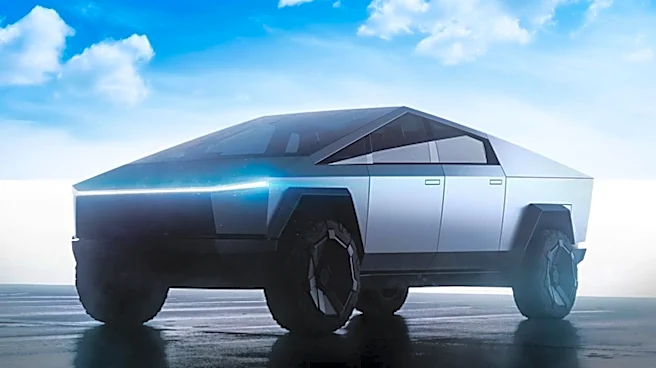
Tesla's Cybercab, an autonomous vehicle, has been involved in eight reported crashes within two months of its operation, according to reports filed with the National Highway Traffic Safety Administration (NHTSA). Four of these incidents occurred with the Robotaxi
service in Austin, Texas, operating at Level 4 driverless autonomy and under 5 miles per hour. These included driving into a pothole, being hit by a backing car, getting rear-ended in traffic, and driving over a concrete edge. An additional four accidents involved Cybercab vehicles being tested with steering wheels and human drivers, utilizing Level 2 ADAS (Autopilot and Full Self-Driving mode). These incidents, which occurred in Philadelphia, Austin, Lehi (Utah), and Tampa, involved collisions at higher speeds, with some resulting in minor injuries. The Cybercab service is currently limited to specific zones in Austin, operates at lower speeds, and is not permitted on highways.
Why It's Important?
The reported crashes raise significant safety concerns regarding Tesla's autonomous driving technology, particularly as the company begins offering Cybercabs to select customers. The incidents, even those at low speeds, highlight potential limitations and risks associated with the current state of autonomous vehicle development. The reliance solely on cameras, as opposed to additional sensors, has been a point of contention and is implicated in ongoing issues with Tesla's driving assistance systems. These safety concerns could impact public trust in autonomous vehicles, potentially leading to increased regulatory scrutiny and slower adoption rates. The incidents also underscore the complexities of deploying self-driving technology safely and reliably on public roads, especially as Tesla aims to expand its Robotaxi service.
What's Next?
Tesla is expected to continue its efforts to expand the Robotaxi service, despite the reported incidents and ongoing safety concerns. This expansion will likely face increased scrutiny from regulatory bodies like the NHTSA, which is already reviewing Tesla's accident data. The company may need to address public and regulatory concerns about the safety and reliability of its autonomous driving systems, potentially through software updates, hardware improvements, or more transparent reporting of incident data. The legal and ethical implications of deploying vehicles without steering wheels that rely on Level 2 ADAS will also likely be a subject of ongoing debate and potential regulatory action. The future of the Cybercab's widespread deployment will depend heavily on Tesla's ability to demonstrate significant improvements in safety and reliability.
Beyond the Headlines
The recurring incidents involving Tesla's autonomous vehicles, including the Cybercab, bring to the forefront broader discussions about the regulatory framework for self-driving technology. The classification of Tesla's Full Self-Driving as a Level 2 system, despite its marketing, creates confusion and potential risks for consumers. The push to deploy autonomous vehicles without robust, independently verified safety data raises ethical questions about the balance between innovation and public safety. This situation could influence how other autonomous vehicle developers approach testing and deployment, potentially leading to more stringent industry standards or government regulations. The long-term success and public acceptance of autonomous transportation hinge on overcoming these safety challenges and building trust through transparent and verifiable performance.