





What's Happening?
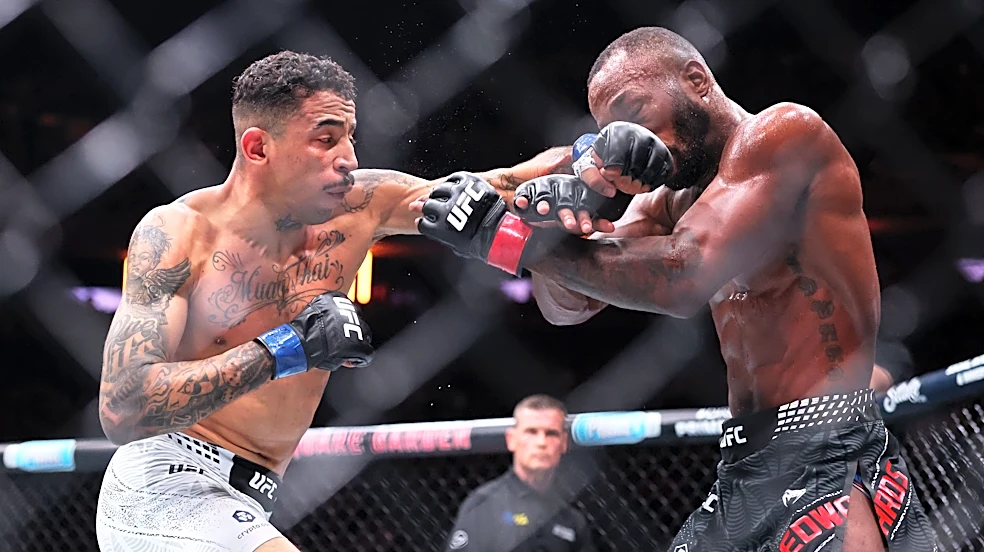
Michael 'Venom' Page, a prominent MMA fighter, is urging his fellow athletes to form a union to collectively address issues of fighter pay. Page recently signed a deal with Misfits Boxing after leaving the UFC, where he claims he will earn 'a lot more'
than he did previously. He won five of his six bouts in the UFC but was critical of the financial compensation for fighters compared to other top-tier athletes. Page advocates for a union similar to the Muhammad Ali Act, a 2000 U.S. law designed to protect boxers' rights and prevent monopolies. He believes that if fighters unite, they can exert significant influence over promotions like the UFC to secure better pay and treatment.
Why It's Important?
This call for a fighter union is highly significant for the mixed martial arts industry, particularly in the U.S., where the UFC dominates. It highlights long-standing concerns about athlete compensation and contractual power imbalances within the sport. If successful, a union could fundamentally alter the economic landscape for MMA fighters, potentially leading to higher pay, better benefits, and improved working conditions. This movement could also challenge the current business model of major promotions, forcing them to renegotiate terms with their talent. The comparison to the Muhammad Ali Act for boxing underscores a desire for similar protections and collective bargaining rights, which could empower fighters and ensure a more equitable distribution of the sport's substantial revenues. This could also attract more talent to the sport by making it a more financially viable career path.
What's Next?
The immediate next step for Michael 'Venom' Page is his debut in Misfits Boxing, which he aims for in the first part of next year, though it's undecided if it will be under boxing or MMA rules. Concurrently, his advocacy for a fighter union will likely continue to gain traction, potentially sparking more public discussions and organizing efforts among MMA athletes. The success of such a union would depend on widespread support from fighters and could face significant resistance from major promotions. The debate over fighter pay is expected to intensify, with potential legal and legislative actions being considered to address the issue, possibly drawing parallels to other professional sports where unions have successfully advocated for athlete rights.
Beyond the Headlines
Page's advocacy extends beyond mere financial gain; it touches upon the ethical responsibilities of sports organizations towards their athletes. The argument that fighters, despite being at the pinnacle of their sport, struggle financially raises questions about the fairness and sustainability of the current economic model in MMA. This issue has broader implications for labor rights in professional sports, where individual athletes often lack the collective bargaining power of teams or leagues. The potential formation of a union could lead to a re-evaluation of how combat sports are structured, potentially influencing everything from revenue sharing to long-term health benefits for fighters. It also highlights the courage required for athletes to speak out against powerful organizations, risking potential repercussions for their careers.