








What's Happening?
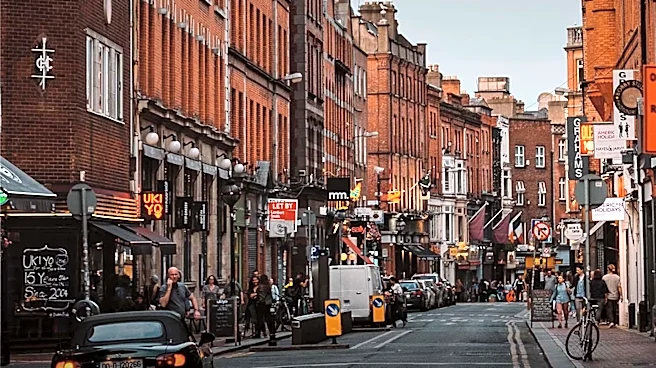
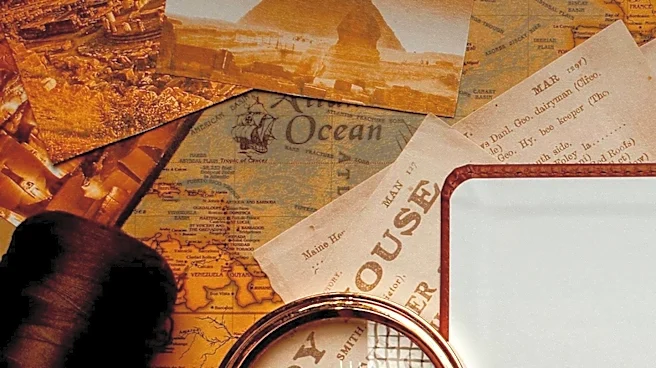
Maggie O’Farrell, a British-Irish novelist, delves into themes of historical cartography and personal displacement in her latest novel, 'Land.' The novel is inspired by the discovery that O’Farrell’s great-great-grandfather was an Irish cartographer involved
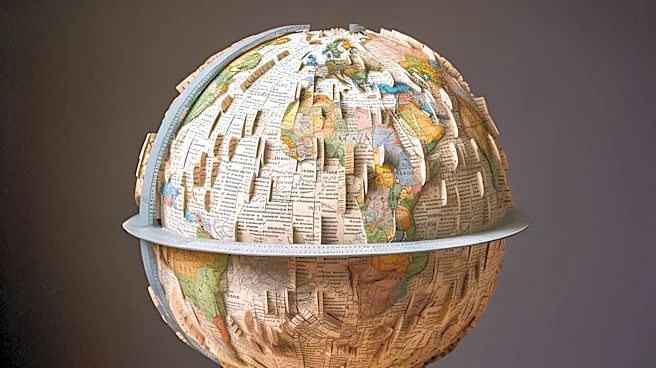
in mapping Ireland for the British Ordnance Survey in the 1860s. This historical backdrop serves as a canvas for exploring the personal and political dimensions of displacement. O’Farrell reflects on her own experiences of moving across different regions, which have shaped her sense of identity and belonging. The novel examines who gets to write history and whose stories are recorded, using mapmaking as a metaphor for resistance against erasure. 'Land' follows the success of O’Farrell’s previous work, 'Hamnet,' which also explored themes of loss and historical narrative.
Why It's Important?
Maggie O’Farrell’s 'Land' offers a poignant exploration of identity, history, and the power dynamics involved in storytelling. By focusing on her ancestor’s role in mapping Ireland, O’Farrell highlights the often-overlooked contributions of Irish cartographers during a period of significant historical upheaval. The novel’s themes resonate with contemporary discussions about representation and the importance of preserving diverse narratives. O’Farrell’s personal reflections on displacement add depth to the narrative, inviting readers to consider their own connections to place and history. This work contributes to the broader literary discourse on how personal and collective histories are intertwined and the impact of historical events on individual identities.
Beyond the Headlines
Beyond its historical and personal narratives, 'Land' raises questions about the ethics of mapmaking and the implications of who controls historical narratives. The novel challenges readers to consider the biases inherent in historical documentation and the ways in which power dynamics shape the stories that are told. O’Farrell’s exploration of her family history serves as a reminder of the importance of uncovering and acknowledging marginalized voices in historical records. The novel’s focus on cartography as a form of resistance underscores the potential for art and literature to challenge dominant narratives and offer alternative perspectives.