








What's Happening?
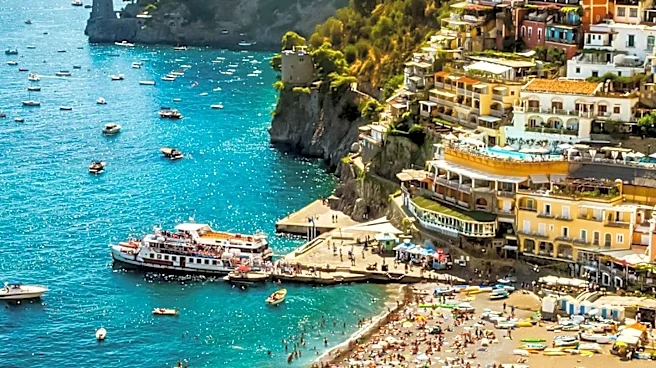
In response to overcrowding, popular European beaches, particularly in Italy, are introducing fees and visitor limits. Sardinia's La Pelosa beach now requires a booking and a fee of 3.50 euros per person, with daily visitor numbers capped at 1,500. Other
beaches, like Cala Goloritzé, have similar restrictions to manage the influx of tourists. These measures aim to preserve the environment and enhance visitor experience by preventing overcrowding. In mainland Italy, private beach clubs control about 33% of the coastline, charging high fees and restricting outside food and drink. The governor of Puglia supports maintaining affordable beach access, emphasizing the sea as a public commodity.
Why It's Important?
The introduction of fees and visitor limits at European beaches reflects a broader trend of managing tourism to protect natural resources and improve visitor experiences. This approach highlights the challenges of balancing tourism with environmental conservation, as popular destinations face pressure from increasing visitor numbers. The measures also raise questions about accessibility and equity, as fees may limit access for some visitors. The situation underscores the need for sustainable tourism practices that consider both economic benefits and environmental impacts, potentially influencing policies in other tourist-heavy regions.
Beyond the Headlines
The restrictions on beach access in Europe may have long-term implications for tourism strategies worldwide. As destinations grapple with the effects of mass tourism, similar measures could be adopted elsewhere to protect natural sites and ensure sustainable visitor numbers. This trend may also prompt discussions about the role of public spaces and the responsibilities of private entities in managing access to natural resources. Additionally, the economic impact on local businesses reliant on tourism could lead to debates about balancing conservation efforts with economic needs.