





What's Happening?
John Deere, a prominent manufacturer of agricultural and construction equipment, has been involved in a significant legal dispute concerning its 'right to repair' policies. The company recently paid out $99 million to settle a lawsuit related to these
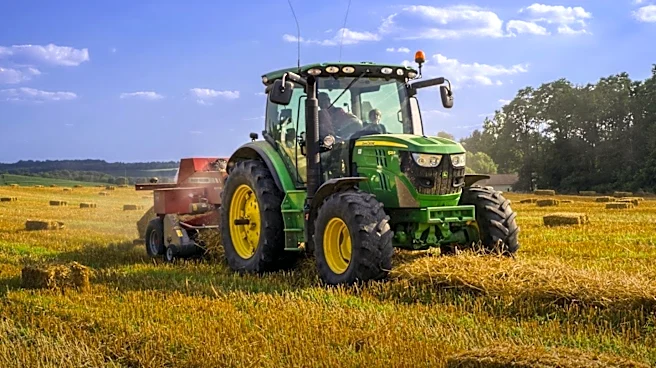
practices. This controversy centers on the ability of farmers and independent mechanics to repair John Deere equipment without relying solely on authorized dealerships. The lawsuit highlighted concerns that John Deere's proprietary software and repair restrictions limited the options available to equipment owners, potentially increasing repair costs and downtime. Despite these legal challenges and the high cost of new models, John Deere continues to offer a diverse range of products, including utility vehicles, lawn tractors like the X354, and utility tractors such as the 5100E. Parts for various models, including the 8110 tractor, are also available for immediate request.
Why It's Important?
The 'right to repair' issue with John Deere has significant implications for the agricultural sector and broader consumer rights in the U.S. For farmers, the inability to independently repair their equipment can lead to substantial financial burdens due to reliance on authorized service centers, potentially causing delays during critical planting or harvesting seasons. This situation affects the operational efficiency and profitability of agricultural businesses, which are vital to the nation's food supply. Beyond agriculture, this case sets a precedent for other industries where manufacturers control access to repair tools and information, impacting everything from consumer electronics to medical devices. The $99 million settlement underscores the growing legal and public pressure on companies to adopt more open repair policies, potentially fostering greater competition in the repair market and empowering consumers with more control over their purchased goods.
What's Next?
The settlement of the lawsuit against John Deere for $99 million is likely to intensify the ongoing debate surrounding the 'right to repair' movement in the U.S. This outcome could encourage further legislative action at both state and federal levels, pushing for laws that mandate manufacturers to provide access to diagnostic tools, parts, and repair manuals to independent repair shops and equipment owners. Other manufacturers in similar industries may re-evaluate their own repair policies to avoid similar legal challenges and public backlash. For John Deere, the company may face continued pressure to demonstrate a commitment to more open repair practices, potentially through new service agreements or increased availability of parts and diagnostic software. This could lead to changes in how agricultural equipment is serviced and maintained across the country, benefiting farmers and independent repair businesses.
Beyond the Headlines
The John Deere 'right to repair' controversy extends beyond mere financial settlements, touching upon fundamental questions of ownership and control in the digital age. As more products, from tractors to smartphones, incorporate complex software and proprietary components, the traditional concept of ownership is being redefined. Consumers are increasingly finding that while they own the physical product, the manufacturer retains significant control over its functionality and repairability. This raises ethical concerns about planned obsolescence and the environmental impact of discarding repairable items. The legal battle with John Deere highlights a broader societal shift towards demanding greater transparency and control from manufacturers, challenging the notion that intellectual property rights should supersede a consumer's right to repair their own property. This movement could ultimately reshape consumer protection laws and influence how products are designed and supported in the future.