






What's Happening?
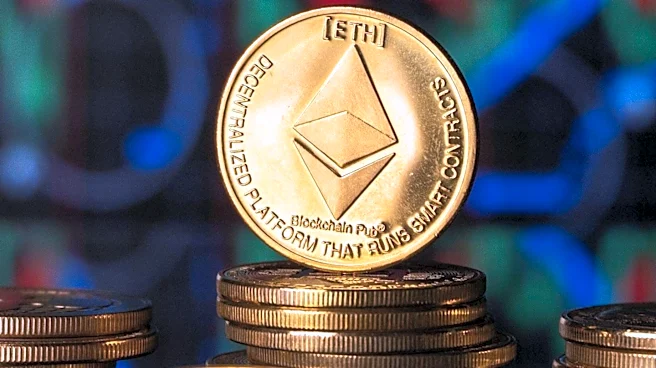
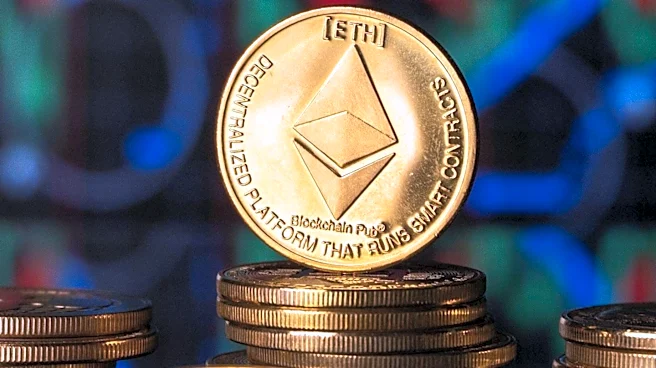
Ethereum's anticipated Glamsterdam upgrade, which was slated for activation on the Hoodi testnet on October 26, has been indefinitely postponed. Developers halted the activation due to unresolved questions surrounding Ethereum Improvement Proposal (EIP-8037)
and its potential interactions with existing smart contracts on the mainnet. This delay means there is no new schedule for the testnet or the mainnet implementation of Glamsterdam. The upgrade aims to bundle several change proposals, including an increase in the gas limit on Hoodi to 200 million, which is also now postponed. The core concern is ensuring that rule changes do not adversely affect older contracts that were designed under different cost assumptions. This cautious approach prioritizes stability over meeting a set deadline. Meanwhile, the circulating supply of Ether continues to grow, increasing by 2,954 Ether per day, leading to an annual expansion rate of approximately 0.88 percent. This growth is attributed to a low base fee of 0.058 Gwei, which is significantly below the 13.63 Gwei threshold required for the burn rate to exceed issuance, as reported on October 31, 2026.
Why It's Important?
The indefinite delay of the Glamsterdam upgrade carries significant implications for the Ethereum ecosystem and its stakeholders. For developers and decentralized application (dApp) creators, the lack of a clear timeline for network improvements means continued uncertainty regarding future capabilities and cost structures. This could impact development roadmaps and the deployment of new features that rely on the upgrade's enhancements. For investors, the continued growth in Ether's circulating supply, driven by low network demand and a low burn rate, challenges the narrative of Ether as a deflationary asset. This supply expansion could exert downward pressure on Ether's price, especially if network usage remains subdued. The current low base fee, while beneficial for users due to reduced transaction costs, signals a lack of demand for computing time on the blockchain, which is a critical indicator of network health and utility. The delay also highlights the inherent complexities and risks associated with upgrading a large, decentralized network with numerous interconnected applications, emphasizing the need for thorough testing and validation to prevent unforeseen issues.
What's Next?
The immediate next step for the Ethereum developers is to resolve the open questions surrounding EIP-8037 and its compatibility with existing smart contracts. Until these concerns are addressed, a new timeline for the Glamsterdam upgrade on both testnets and the mainnet will not be established. Stakeholders, including node operators and dApp developers, will need to monitor official communications from the Ethereum Foundation for updates on the technical resolution and subsequent scheduling. For Ether holders, the focus will likely remain on network demand, as indicated by the base fee. A sustained increase in network activity, pushing the base fee closer to or above the 13.63 Gwei threshold, would be necessary to shift the supply dynamics from inflationary to deflationary. The market will also be watching for any potential shifts in investor sentiment or developer activity that might arise from the prolonged delay, as this could influence Ether's price trajectory and the broader perception of Ethereum's development agility.
Beyond the Headlines
The Glamsterdam delay underscores a fundamental tension in blockchain development: the balance between innovation and stability. While upgrades are crucial for scalability and functionality, ensuring backward compatibility and preventing disruptions to existing applications is paramount. This incident highlights the rigorous, often slow, process required for significant protocol changes in a decentralized environment, contrasting with the faster iteration cycles seen in centralized software development. Ethically, the developers' decision to prioritize caution over a fixed deadline demonstrates a commitment to user safety and network integrity, even if it means delaying anticipated improvements. Legally, the implications of unintended interactions with smart contracts could be substantial, potentially leading to financial losses or operational failures for dApps, reinforcing the need for meticulous pre-deployment validation. Culturally, this event may reinforce the perception among some that blockchain development is inherently complex and prone to delays, potentially impacting broader adoption if not managed effectively. The long-term shift could be a greater emphasis on formal verification methods and more robust testing frameworks to mitigate such risks in future upgrades.