







What's Happening?
China has released new guidelines, jointly issued by nine government departments including the Ministry of Commerce, to promote the application of artificial intelligence (AI) and other advanced technologies in commerce. These guidelines outline 18 measures
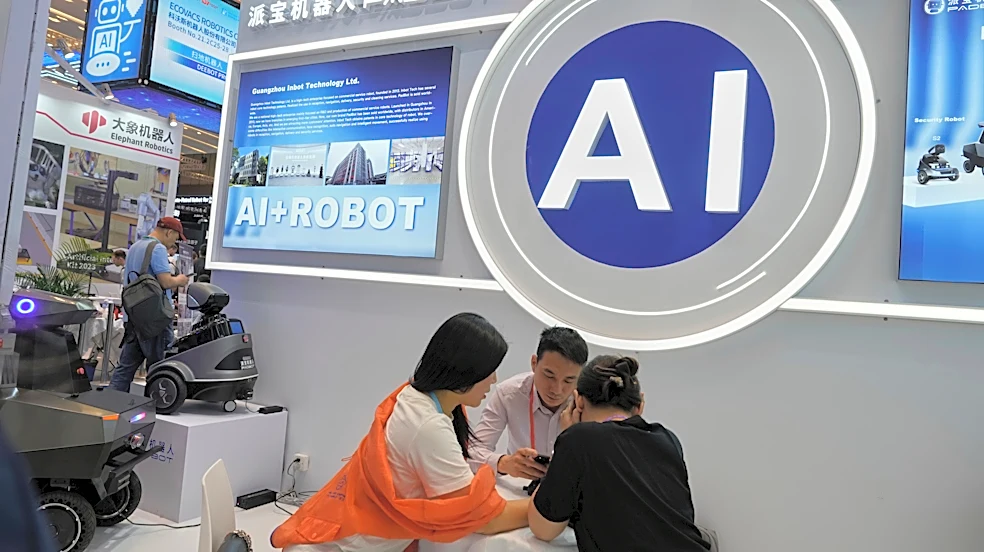
aimed at upgrading consumption and improving commercial distribution efficiency. Key areas of focus include integrating AI into product development, design, manufacturing, and marketing to expand the supply of smart devices and robots, and encouraging flexible manufacturing and AI-powered customization. In the services sector, the guidelines support AI applications in healthcare, smart elderly care, digital transformation of catering businesses, and pilot programs in culture and tourism. For commercial distribution, measures include promoting smart warehouses, intelligent logistics equipment, and unmanned delivery, alongside digital upgrades in wholesale and retail businesses. The guidelines also call for developing commercial AI agents for shopping assistance, business operations, and logistics, expanding embodied intelligence applications, and creating virtual shopping experiences, while supporting technology standards, digital infrastructure, and financing.
Why It's Important?
These new guidelines from China signify a strategic national effort to leverage AI and advanced technologies to modernize its commercial sector and boost domestic consumption. By integrating AI across the entire commercial value chain—from product creation to distribution and consumer experience—China aims to enhance efficiency, foster innovation, and create new economic growth points. This initiative could lead to a significant transformation in how goods and services are produced, delivered, and consumed within China, potentially setting new global benchmarks for AI integration in commerce. The focus on smart products, AI-enabled services, and intelligent logistics reflects a comprehensive approach to digital transformation. For U.S. businesses and policymakers, this development highlights China's aggressive push in AI adoption, which could intensify global competition in technology and trade, particularly in areas like smart manufacturing, e-commerce, and logistics. It also underscores the importance of continuous innovation and technological investment for maintaining competitiveness in the global economy.
What's Next?
Following the release of these guidelines, various government departments and commercial entities in China are expected to implement the 18 outlined measures. This will likely involve increased investment in AI research and development, particularly in areas relevant to commerce, such as AI agents, embodied intelligence, and virtual shopping experiences. Businesses will be encouraged, and potentially incentivized, to adopt AI technologies in their operations, leading to a surge in demand for AI solutions and skilled personnel. Pilot programs in healthcare, elderly care, culture, and tourism will likely expand, providing real-world data and case studies for broader implementation. The government will also focus on developing supporting infrastructure, including technology standards and digital infrastructure, and facilitating financing for AI-driven commercial projects. This phased implementation is anticipated to gradually transform China's commercial landscape, with continuous monitoring and adjustments to the guidelines as the market evolves.
Beyond the Headlines
The comprehensive nature of China's new AI guidelines suggests a deeper ambition beyond mere economic growth; it reflects a strategic vision to establish technological leadership and reshape societal interaction with commerce. The emphasis on 'AI plus consumption' and 'embodied intelligence' indicates a move towards highly personalized and immersive consumer experiences, potentially blurring the lines between physical and digital retail. This could raise ethical considerations regarding data privacy and algorithmic bias, as AI systems become more integrated into personal purchasing decisions and service delivery. From a geopolitical perspective, China's aggressive push in AI commercialization could further solidify its position as a global tech powerhouse, influencing international standards and practices in AI development and deployment. This initiative also highlights a potential model for other nations looking to harness AI for economic development, showcasing a top-down, coordinated approach to technological integration across multiple sectors.