




What's Happening?
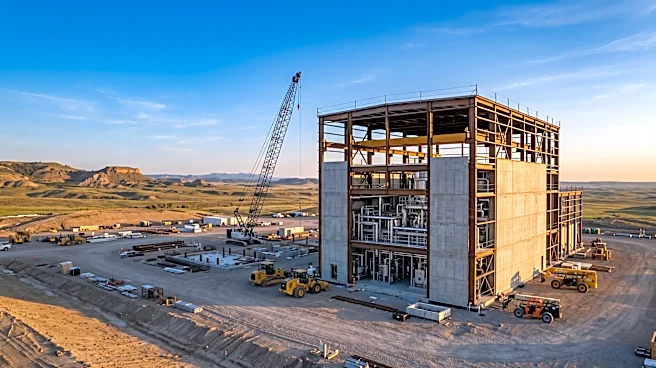
Bellevue, Washington-based TerraPower's signature 345-megawatt, zero-carbon emission Natrium power plant project in Kemmerer, Wyoming, has encountered a significant hurdle. Bechtel, the general contractor for the project, has abruptly withdrawn from the construction.
This exit follows reported disagreements between the two companies regarding the project's progression. Bechtel filed an employee lay-off notice, known as a WARN, in Virginia on September 15, indicating approximately 200 impending layoffs around November 16. TerraPower, co-founded by Bill Gates, broke ground on the Natrium plant on June 10. The project aims to create bulk electricity generation using an advanced small modular reactor (SMR) design with a molten salt thermal storage system. Despite the setback, Bechtel stated it would remain on-site to support an orderly transition and complete the sodium test and fill facility. TerraPower plans to rebid the contract for the main construction.
Why It's Important?
This development is significant for the future of advanced nuclear energy in the U.S. TerraPower's Natrium project is a pioneering effort in clean energy, designed to provide continuous electrical power and integrate with renewable resources. The departure of a major contractor like Bechtel could lead to delays and increased costs for a project that is already a public-private partnership through the U.S. Department of Energy’s Advanced Reactor Demonstration Program (ARDP). Such setbacks can impact investor confidence in new nuclear technologies and potentially slow down the transition to zero-carbon energy sources. The project's unique structure, being the only coal-to-nuclear project under development globally, makes its success crucial for demonstrating the viability of converting existing energy infrastructure. Delays could also affect the timeline for the plant becoming operational, which was anticipated for 2031, and its ability to power approximately 400,000 homes.
What's Next?
TerraPower will now need to rebid the general contractor role for the Natrium power plant project. This process will involve identifying and securing a new engineering, procurement, and construction (EPC) contractor to take over from Bechtel. While Bechtel will complete the sodium test and fill facility, the main construction of the 345-MWe sodium-cooled fast reactor will be on hold until a new contractor is in place. TerraPower had previously announced Hyundai Engineering & Construction as an EPC contractor for up to eight of its sodium-cooled fast reactors, suggesting a potential candidate for the rebid. The U.S. Nuclear Regulatory Commission (NRC) approved the construction permit for the plant on March 4, the first for a commercial non-light water reactor in nearly a decade. Non-nuclear construction is underway, with nuclear construction slated to begin after further NRC approval in 2027 or 2028. The project's timeline and budget will likely be re-evaluated following this contractor change.
Beyond the Headlines
The disagreement between TerraPower and Bechtel highlights the inherent complexities and risks associated with large-scale, innovative energy projects, particularly in the nascent advanced nuclear sector. The reliance on specialized engineering and construction expertise means that disruptions in contractor relationships can have cascading effects. This event could prompt a closer examination of contracting models and risk-sharing agreements in future advanced reactor deployments. Furthermore, it underscores the challenges of bringing cutting-edge technologies from the drawing board to commercial operation, even with significant financial backing from figures like Bill Gates and government support. The project's success is not just about technological innovation but also about effective project management and stakeholder alignment, which are critical for the broader adoption of advanced nuclear energy as a climate solution.