






What's Happening?
Micron Technology's core memory and storage products, including DRAM and NAND flash, have been exempted from new U.S. tariffs targeting selected imported electronics. This policy decision shields critical components found in servers, smartphones, and PCs
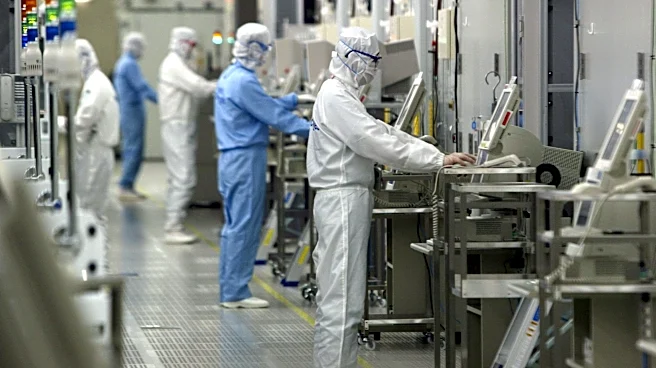
from additional duties, while other hardware categories like headphones and printers may face increased import costs. Micron Technology is a leading designer and manufacturer of memory chips, with its revenue significantly influenced by memory prices. The company's narrative emphasizes tight DRAM and NAND supply, long-term AI customer contracts, and substantial U.S. manufacturing expansion. This tariff exemption directly supports Micron's strategy of investing in domestic fabrication plants and catering to AI-driven memory demand. The company plans approximately $25 billion in capital spending in the first half of fiscal year 2027, indicating a strong commitment to its growth trajectory and U.S. production capabilities. This exemption highlights a strategic alignment between U.S. policymakers and domestic high-value memory output.
Why It's Important?
The exemption of Micron Technology's products from new U.S. tariffs is significant for several reasons. It signals a clear intent from U.S. policymakers to foster local high-value memory production and ensure a smooth supply chain for essential components in servers and smartphones, benefiting companies like Micron, NVIDIA, and AMD. This policy decision directly supports Micron's substantial investments in U.S. manufacturing facilities and its focus on advanced memory nodes, which are crucial for the burgeoning artificial intelligence sector. By reducing potential import costs, the exemption enhances Micron's competitive position in the domestic market and reinforces its business model built on tight supply and long-term AI contracts. For the broader U.S. technology industry, this move could encourage further domestic investment in semiconductor manufacturing, reducing reliance on foreign supply chains and bolstering national economic security. It also suggests a strategic approach to tariffs, differentiating between critical components and other consumer electronics to protect key technological advancements.
What's Next?
While the tariff exemption provides immediate relief and strategic alignment for Micron Technology, the company still faces broader trade and export control risks, particularly concerning China. Future regulatory decisions regarding the sale of advanced memory into sensitive markets could impact Micron's long-term contracts and its significant capital spending plans. The industry will be watching for any further developments in U.S. trade policy that could affect semiconductor exports or imports. Additionally, the substantial capital spending planned by Micron and potential new supply across the industry could influence memory prices in the future. Investors will continue to assess how these factors, alongside the ongoing demand for AI-related memory, shape Micron's financial performance and market position. The U.S. government's continued stance on supporting domestic semiconductor manufacturing will also be a key area to monitor, as it could lead to further incentives or policies benefiting companies like Micron.
Beyond the Headlines
This tariff exemption for Micron Technology underscores a deeper strategic shift in U.S. industrial policy, prioritizing domestic production of critical technologies like semiconductors. It reflects a recognition that memory chips are foundational to the digital economy and national security, particularly with the rise of artificial intelligence. The selective application of tariffs suggests a nuanced approach to trade, where certain sectors are protected and encouraged to grow domestically, even as broader trade tensions persist. This could lead to a more resilient U.S. technology supply chain, reducing vulnerabilities to geopolitical disruptions. Ethically, it raises questions about the balance between free trade principles and national industrial policy goals. Legally, it sets a precedent for how the U.S. government might use tariff policy to shape domestic manufacturing capabilities. Culturally, it could foster a renewed emphasis on American technological leadership and innovation, potentially influencing educational and workforce development initiatives to support the growing semiconductor industry.