




What's Happening?
Interior designers are strongly recommending a layered approach to lighting in living rooms, moving away from the traditional reliance on a single overhead fixture. Experts like Amy Peltier of Peltier Interiors and Shannon Hubby of Shannon Eddings Interiors emphasize
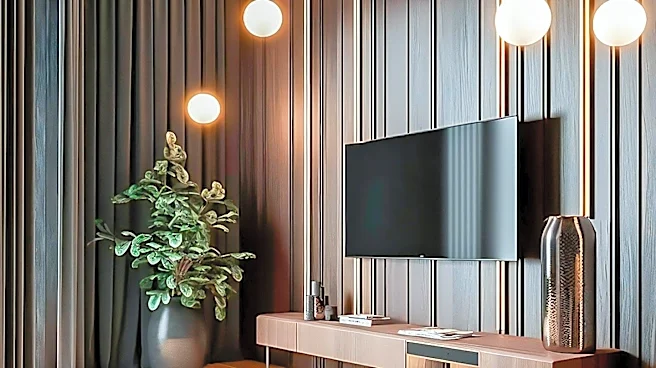
that the goal is not a specific number of lamps, but rather creating 'pockets of warm, inviting light' throughout the space. This involves combining various types of lighting, including overhead chandeliers, wall sconces, and table or floor lamps, to achieve a cozy and lived-in feel. Brooke Mennen-Talsma of Brooke MT Interiors suggests incorporating at least one main overhead chandelier, one hardwired wall lamp, and one layered table or floor lamp. The consensus among designers is that layered lighting allows for greater control over the room's ambiance, enabling homeowners to adjust the lighting to suit different activities and times of day, and to highlight specific features of the room.
Why It's Important?
This shift in living room lighting strategy is significant for several reasons. Firstly, it addresses a common design flaw where single-source overhead lighting can create a harsh and uninviting atmosphere, making a room feel less comfortable and functional. By layering different light sources, homeowners can achieve a more balanced and aesthetically pleasing illumination that enhances the overall design and mood of the space. Secondly, it promotes the concept of 'zoning' within a living room, where specific areas are lit for particular tasks or to create distinct moods, such as a reading nook with a dedicated task lamp or accent lighting for artwork. This approach improves the usability and versatility of the living room. For the home decor and lighting industries, this trend signifies a demand for a wider variety of fixtures and smart lighting solutions that offer flexibility and control, encouraging innovation in product design and functionality. It also underscores the growing consumer desire for personalized and sophisticated home environments that prioritize comfort and well-being.
What's Next?
The trend of layered living room lighting is expected to continue gaining momentum, with further integration of smart home technology. Consumers can anticipate more sophisticated lighting control systems that allow for seamless adjustment of brightness, color temperature, and even automated lighting scenes. Designers will likely explore more creative placements for smaller lamps in unexpected areas, such as bookshelves, built-in cabinetry, or window nooks, to add subtle pockets of light and enhance the lived-in feel of a room. The market will also see an increased emphasis on the scale and placement of lighting fixtures, ensuring they complement the room's dimensions and design aesthetic. Furthermore, there may be a growing interest in sustainable and energy-efficient lighting options, as homeowners become more environmentally conscious. This will drive manufacturers to develop more eco-friendly materials and production processes for lighting fixtures, alongside offering longer-lasting and more efficient LED bulbs.
Beyond the Headlines
Beyond the immediate practical and aesthetic benefits, the emphasis on layered living room lighting reflects a deeper cultural shift towards creating more intentional and nurturing home environments. In an era where homes often serve multiple functions—from work to relaxation to entertainment—the ability to adapt lighting to suit various needs is crucial. This approach to lighting design contributes to a sense of psychological comfort and well-being, transforming living rooms into versatile and inviting spaces. The move away from purely functional lighting towards a more artistic and atmospheric approach also highlights a growing appreciation for interior design as a form of self-expression. It encourages homeowners to view lighting not just as a utility, but as a key element in crafting a personal sanctuary that reflects their style and enhances their quality of life. This trend ultimately underscores the evolving relationship between individuals and their living spaces, where design choices are increasingly driven by a desire for comfort, beauty, and emotional resonance.