


What's Happening?
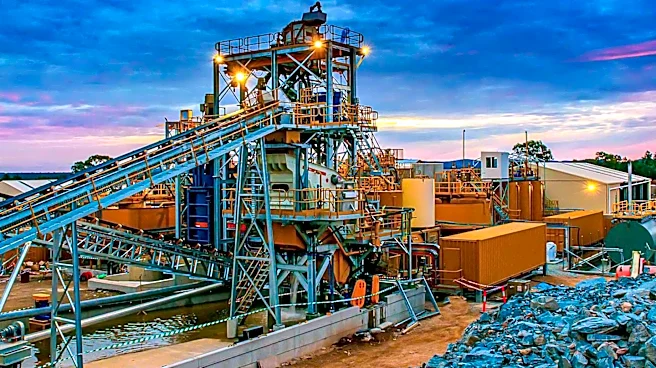
Nouveau Monde Graphite (NYSE:NMG), a Canadian mining and advanced materials company, is progressing with the construction of its Matawinie graphite mine in Quebec. Concurrently, the company is aiming for a final investment decision on its Bécancour battery-anode-material
facility within the next few months. This strategy, outlined by Marc Jasmin, the company's director of investor relations, during a Virtual Investor Conferences presentation, focuses on an integrated model combining graphite mining with battery anode material processing in Quebec. The Matawinie project, located near Saint-Michel-des-Saints, is designed for an annual production of 106,000 metric tons, with commissioning targeted by the end of 2028. Approximately 25% of Matawinie's planned production is intended for processing at the Bécancour facility, which would supply battery anode material to Panasonic Energy's De Soto, Kansas plant and potentially Panasonic's operations associated with Tesla in Nevada. The company has secured construction financing for Matawinie, reporting CAD 461 million in cash and CAD 12.5 million in funded debt.
Why It's Important?
This development is significant for the U.S. lithium-ion battery industry and the broader clean-technology sector. Nouveau Monde Graphite's integrated approach aims to establish a North American source of graphite, a critical material for electric vehicle batteries and energy storage systems. Currently, China controls a substantial portion of global graphite mining and over 95% of uncoated spherical graphite production. By developing a large-scale graphite production and processing facility in North America, Nouveau Monde Graphite could help diversify the supply chain, reducing reliance on Chinese imports and enhancing supply security for U.S. manufacturers like Panasonic Energy. The availability of low-cost hydroelectricity in Quebec could also make Nouveau Monde competitive with Chinese suppliers on operating costs, despite potentially higher capital costs in North America. This initiative supports the broader U.S. goal of building a robust domestic supply chain for electric vehicle components and fostering energy independence.
What's Next?
Nouveau Monde Graphite is expected to make a final investment decision on its Bécancour battery-anode-material facility in the coming months. The company is evaluating an adjacent brownfield acquisition that could potentially reduce capital costs and accelerate the development timeline for the Bécancour plant. Construction of the Matawinie mine is anticipated to be commissioned by the end of 2028, followed by an estimated six-month ramp-up period. The company plans to evaluate future expansion opportunities, including additional brownfield facilities in Canada or Europe, after establishing its initial integrated graphite operation. Additionally, Nouveau Monde is exploring potential revenue streams from its tailings, such as sulfur-related products, with third parties expressing interest in funding associated capital expenditures.
Beyond the Headlines
The establishment of a significant North American graphite supply chain, as pursued by Nouveau Monde Graphite, carries profound implications beyond immediate economic benefits. It addresses critical geopolitical and strategic concerns related to raw material access for advanced technologies. The current dominance of China in graphite production presents a vulnerability for Western nations, particularly as the demand for electric vehicles and renewable energy storage escalates. By fostering a domestic supply, the U.S. and its allies can mitigate risks associated with supply disruptions, trade disputes, and geopolitical tensions. This move also aligns with environmental, social, and governance (ESG) objectives, as it promotes a more localized and potentially more sustainable sourcing of materials, reducing the carbon footprint associated with long-distance transportation and potentially adhering to higher environmental standards in mining and processing. The success of such ventures could set a precedent for other critical minerals, encouraging a broader shift towards regionalized supply chains for strategic resources.