










What's Happening?
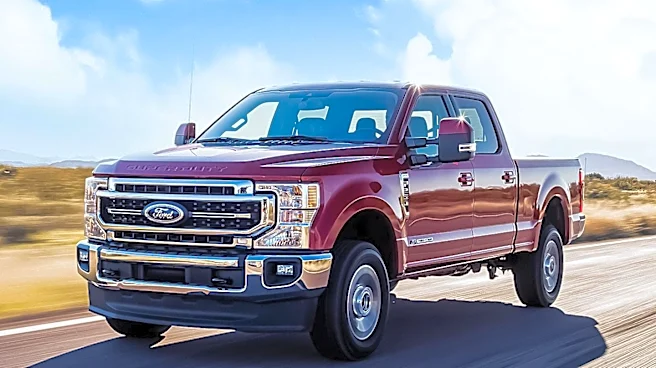
Ford Motor Company has reported a 10.3% decline in sales for the second quarter of 2026, selling 549,200 units. This decline is attributed to ongoing supply chain disruptions, particularly affecting the F-Series trucks, which saw a significant drop of 55,047
units in sales from January to June. The supply issues stem from an aluminum shortage caused by a fire at a Novelis plant in September 2025. Additionally, the planned phase-outs of the Ford Escape and Lincoln Corsair models contributed to the overall sales decline. Despite these challenges, Ford's total sales for the first half of the year exceeded one million units, marking a 9.6% decrease year-on-year.
Why It's Important?
The supply chain disruptions affecting Ford highlight the broader challenges faced by the automotive industry in maintaining production levels amid material shortages. The F-Series trucks are a critical product line for Ford, and the significant drop in sales could impact the company's financial performance and market position. This situation underscores the vulnerability of global supply chains to unexpected disruptions and the importance of developing more resilient and diversified sourcing strategies. The decline in sales also reflects the ongoing adjustments in Ford's product lineup as it phases out certain models to focus on more profitable and strategic offerings.
What's Next?
Ford will need to address the supply chain issues to stabilize production and sales of its F-Series trucks. This may involve seeking alternative suppliers or investing in supply chain resilience to prevent future disruptions. The company will also continue to adjust its product strategy, potentially accelerating the development and introduction of new models that align with market demands and sustainability goals. As Ford navigates these challenges, its ability to adapt and innovate will be crucial in maintaining its competitive edge in the automotive industry.