






What's Happening?
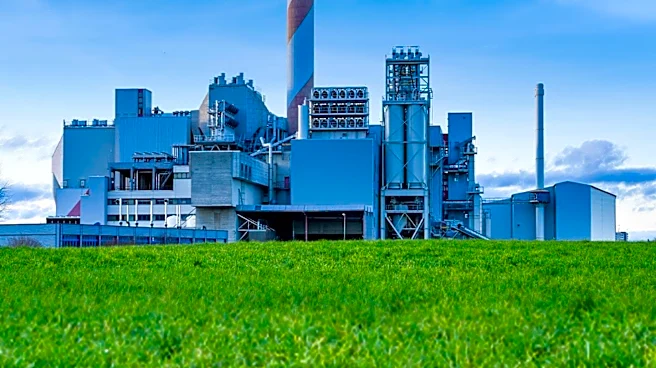
Anthro Energy has commenced construction of its inaugural commercial electrolyte factory in Louisville, Kentucky. This facility, which began its construction phase after being announced in 2024, is set to become the first U.S.-owned and operated advanced
electrolyte factory in the country. Commercial production is slated to begin in late 2027, with the plant expected to produce up to 12,000 tonnes of polymer electrolyte annually. This capacity is sufficient to support the production of up to 25 GWh of lithium-ion battery cells. The factory will initially manufacture various electrolyte formulations, with a potential increase in the share of Anthro's proprietary Proteus platform as customer validation progresses. The Proteus platform is a polymer electrolyte that is processed as a liquid during cell production before solidifying, aiming to improve mechanical stability and safety. The project is anticipated to create approximately 110 permanent jobs.
Why It's Important?
This groundbreaking represents a significant step towards establishing a robust domestic supply chain for battery components in the United States. By producing electrolytes within the U.S., Anthro Energy aims to reduce reliance on foreign suppliers, particularly those subject to U.S. regulations concerning Foreign Entities of Concern (FEOC). This move is crucial for enhancing national energy independence and supporting the rapid growth of the electric vehicle (EV) and stationary storage sectors. The factory's location in the U.S. 'Battery Belt' ensures proximity to numerous existing and planned battery cell and vehicle plants, facilitating efficient supply and integration into the broader battery manufacturing ecosystem. Furthermore, Anthro's polymer electrolyte technology could serve as a bridge to semi-solid and solid-state batteries, potentially overcoming manufacturing challenges associated with these next-generation battery types and accelerating their commercialization.
What's Next?
Anthro Energy plans to commission the Louisville plant in phases, with commercial production expected to commence in late 2027. The company will focus on scaling up its manufacturing processes and validating its Proteus platform with customers. The success of this factory could encourage further investment in domestic electrolyte production and other critical battery components. Anthro Energy has already secured a $24.9 million grant from the U.S. Department of Energy under the Infrastructure Investment and Jobs Act and $18.4 million in tax credits under the 48C Advanced Energy Project Tax Credit Program, indicating strong governmental support. The facility's ability to supply U.S.-made electrolytes to both conventional lithium-ion battery manufacturers and producers of next-generation cells will be a key factor in its impact on the U.S. battery industry. The long-term viability of the polymer electrolyte technology on an industrial scale will also be closely watched.
Beyond the Headlines
The establishment of this factory goes beyond mere production capacity; it signifies a strategic effort to onshore advanced manufacturing capabilities and foster innovation in battery technology. By developing electrolytes that can be integrated into existing lithium-ion cell production processes with minor adjustments, Anthro Energy is addressing a critical bottleneck in the transition to more advanced battery chemistries. This approach could democratize access to cutting-edge battery technology, making it more feasible for U.S. manufacturers to adopt and scale new solutions. The emphasis on using materials not subject to FEOC regulations also highlights a broader national security imperative to secure critical supply chains. This initiative could set a precedent for other specialized component manufacturers to localize their production, further solidifying the U.S. position in the global battery market and reducing geopolitical dependencies.