

What's Happening?
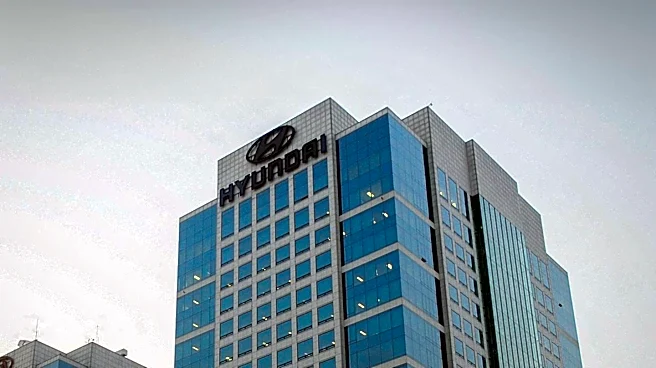
Hyundai Motor Group has announced key executive leadership appointments across its components and construction businesses, effective in 2026. These changes are designed to address immediate business priorities and accelerate the company's transformation
in strategic areas such as electrification and Software Defined Vehicles (SDVs). Cheol Seung Baek, formerly CEO of Hyundai Transys, has been promoted to President and appointed CEO of Hyundai Mobis. Chan Young Park, Executive Vice President and Head of the Procurement Division at Hyundai Motor Group, will take over as CEO of Hyundai Transys. Additionally, Tae Jun Na, Head of the Architecture Division at Hyundai Engineering, has been promoted to Executive Vice President and appointed CEO of Hyundai Engineering. The existing management structure for Hyundai, Kia, and Genesis brands remains unchanged, with Hyundai Motor President José Muñoz and Kia President Song Ho-sung retaining their positions. The Group aims to strengthen the long-term competitiveness of its affiliates and foster greater synergies across the organization.
Why It's Important?
These leadership changes are critical for Hyundai Motor Group's strategic pivot towards electrification and advanced vehicle technologies, which are central to the future of the automotive industry. The appointment of Cheol Seung Baek to lead Hyundai Mobis, a key components supplier, signals a focus on improving profitability and strengthening its future business in electrification and automotive electronics. Chan Young Park's expertise in electrification procurement and supply chain management at Hyundai Transys is vital for securing the necessary components and optimizing production for electric vehicles. Tae Jun Na's leadership at Hyundai Engineering, with his experience in EV and battery plant projects and expansion into North American industrial facilities, underscores the Group's commitment to infrastructure development supporting its automotive ambitions. These moves are essential for Hyundai Motor Group to maintain its competitive edge in the rapidly evolving global automotive market, particularly in the U.S., where demand for EVs and advanced manufacturing is growing.
What's Next?
The newly appointed leaders are expected to immediately focus on their respective mandates. Cheol Seung Baek at Hyundai Mobis will work on optimizing the business portfolio and enhancing competitiveness in future technologies. Chan Young Park at Hyundai Transys will concentrate on strengthening core powertrain, electrification, and seating businesses, while also optimizing production and expanding global operations. Tae Jun Na at Hyundai Engineering will prioritize profitability and risk management while accelerating growth in advanced industrial construction and other strategic areas, including data centers and North American industrial facilities. These leadership changes are anticipated to drive the Group's strategic initiatives, particularly in the U.S. market, where significant investments in EV manufacturing and related infrastructure are underway. The success of these leaders will be crucial in determining Hyundai Motor Group's trajectory in the coming years as it navigates the complexities of technological transformation and market shifts.
Beyond the Headlines
These executive appointments reflect a broader industry trend where traditional automotive manufacturers are restructuring to adapt to the demands of electrification and software-defined vehicles. The emphasis on strengthening the supply chain for electrification and expanding localization, as highlighted by Chan Young Park's role, points to a strategic effort to mitigate risks associated with global supply chain disruptions and enhance regional manufacturing capabilities, particularly in North America. The focus on data centers and industrial facilities by Hyundai Engineering also indicates a recognition of the growing need for robust digital infrastructure to support advanced vehicle technologies and smart manufacturing. This holistic approach, encompassing both vehicle production and supporting infrastructure, suggests a long-term vision for Hyundai Motor Group to become a comprehensive mobility solutions provider, rather than just a car manufacturer. The success of these integrated strategies will likely influence the competitive landscape of the U.S. automotive market and beyond.