





What's Happening?
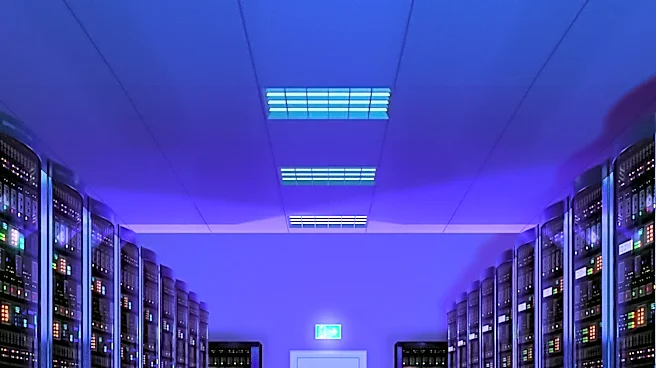
Applied Digital has announced the completion of base-build commissioning for the first 75 MW of its initial 150 MW data center building at Polaris Forge 2 in Harwood, North Dakota. This phase includes the integrated fit-out of the first 25 MW data hall,
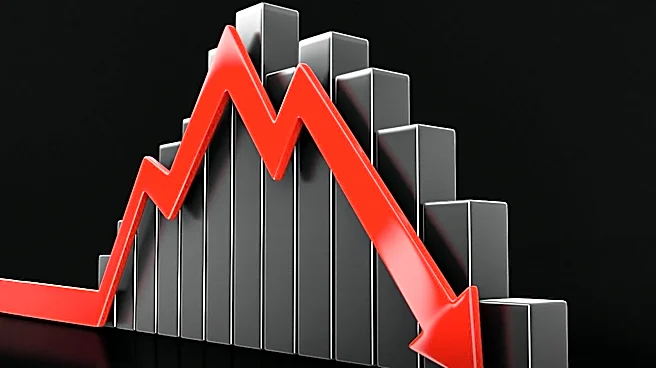
which is now Ready for Service, meeting its scheduled completion. Concurrently, the company has finalized an 18-year lease agreement for 150 megawatts with an investment-grade hyperscaler. This significant deal has elevated Applied Digital's contracted revenue to over $41 billion, with the agreement itself valued at $5.4 billion. Despite these operational and contractual achievements, Applied Digital's stock has experienced a substantial downturn, dropping 33% over the past month to approximately $12.28 per share. This decline reflects a broader sector-wide trend affecting AI infrastructure stocks, as noted by Blockspace Media.
Why It's Important?
The completion of the data center commissioning and the securing of a long-term lease with a hyperscaler are critical milestones for Applied Digital, signaling operational progress and substantial revenue generation potential. The 18-year lease, valued at $5.4 billion, significantly bolsters the company's financial outlook by increasing its contracted revenue to over $41 billion, providing long-term stability and visibility. This demonstrates strong demand for high-capacity data center infrastructure, particularly from investment-grade clients. However, the concurrent 33% drop in Applied Digital's stock price highlights a disconnect between fundamental business growth and market sentiment. This market reaction suggests that broader economic or sector-specific concerns, such as a general sell-off in AI infrastructure stocks, are outweighing positive company-specific news. This trend could impact investor confidence in the AI infrastructure sector, potentially affecting future capital raising efforts for companies in this space.
What's Next?
Applied Digital's immediate focus will likely be on the continued build-out and commissioning of the remaining capacity at Polaris Forge 2, ensuring the full 150 MW data center building becomes operational to meet the demands of its new hyperscaler client. The company will also need to address investor concerns regarding its stock performance, potentially through further strategic announcements or by demonstrating sustained operational efficiency and profitability. Analyst firms like Needham and JonesTrading have maintained 'Buy' ratings with price targets significantly above the current stock price, indicating a belief in the company's long-term value. However, the broader market sentiment towards AI infrastructure stocks will play a crucial role in whether Applied Digital's stock can rebound towards previous levels, such as the $20 mark. The company's ability to secure additional hyperscaler leases and execute its expansion plans without significant debt accumulation or further share dilution will be key factors in its future stock performance.
Beyond the Headlines
The situation with Applied Digital underscores a complex dynamic within the rapidly evolving AI infrastructure market. While the demand for data center capacity, especially for AI workloads, is robust, as evidenced by the significant hyperscaler lease, investor sentiment can be highly volatile and influenced by broader market trends. The sector-wide decline in AI infrastructure stocks, despite strong underlying business fundamentals for some companies, suggests that investors may be re-evaluating valuations or reacting to macroeconomic pressures. This could lead to a period of consolidation or increased scrutiny on profitability and debt levels within the industry. For Applied Digital, managing its $6 billion in debt and potential new share issuance will be critical to maintaining investor confidence and achieving its growth objectives. The long-term success of companies in this space will depend not only on securing large contracts but also on efficient capital management and navigating market perceptions of risk and return in a high-growth, high-investment sector.