




What's Happening?
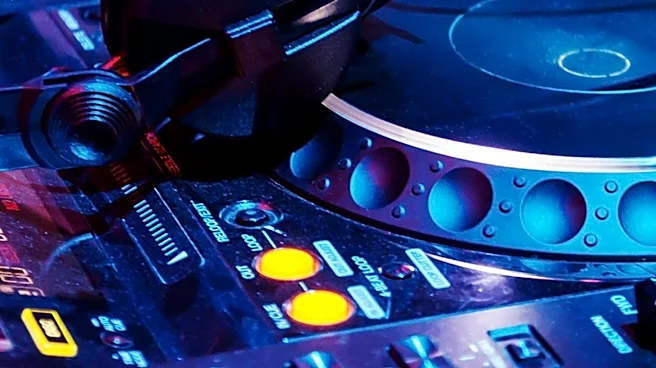
A Jewish high school student and part-time DJ in Allentown, Pennsylvania, is grappling with the ethical implications of playing music by artists who have made antisemitic or controversial statements. The DJ, who runs a nonprofit called DJ4GOOD providing
free music for community events, recounts an instance where friends requested a Kanye West song at a BBYO conference party. Despite the song's popularity, the DJ chose not to play it due to Kanye West's past antisemitic remarks, including threatening to go 'death con 3' on Jewish people and praising Hitler. This incident highlights a broader challenge faced by DJs: balancing audience requests and the desire to create a joyful atmosphere with personal values and the public conduct of artists. The DJ also notes that Macklemore was reportedly dropped from Ed Sheeran's U.S. Loop Tour for pro-Palestinian statements, and Robert Kraft blocked Macklemore from performing at Gillette Stadium due to his actions and alleged antisemitic rhetoric. These events underscore the increasing scrutiny on artists' public behavior and its impact on their careers and the choices of those who play their music.
Why It's Important?
This situation is important because it reflects a growing societal trend where consumers and professionals are increasingly considering the ethical stances and public conduct of artists and public figures. For the music industry, it raises questions about the responsibility of artists for their words and actions, and how these might affect their commercial viability and public reception. DJs, as curators of musical experiences, are now faced with the complex task of navigating these ethical considerations, potentially leading to difficult decisions that could impact their relationships with audiences and event hosts. The dilemma also highlights the broader cultural conversation around 'cancel culture' and the extent to which an artist's work can be separated from their personal views. This can influence public policy discussions regarding freedom of speech versus accountability, especially when controversial statements are perceived to incite hate or discrimination. The incident also underscores the challenges faced by Jewish communities in the U.S. as they grapple with antisemitism and anti-Zionism, influencing their choices in entertainment and cultural consumption.
What's Next?
The ongoing debate about artists' public conduct and its impact on their music careers is likely to continue, prompting more individuals and organizations to establish clear guidelines for engagement. DJs and event organizers may increasingly adopt policies that reflect their values, potentially leading to more artists being excluded from playlists or performance venues based on their controversial statements. This could further polarize the entertainment landscape, with some artists facing reduced opportunities while others who align with certain ethical standards gain favor. The incident also suggests a potential shift in audience expectations, where listeners may become more discerning about the artists they support, demanding greater accountability for their actions. This could lead to a more conscious consumption of media and entertainment, influencing how artists are perceived and how their work is disseminated. Furthermore, the discussion may prompt more open conversations within communities about how to address and respond to hate speech and discrimination in the public sphere.
Beyond the Headlines
The ethical dilemma faced by the Jewish teen DJ extends beyond individual choices, touching upon deeper societal implications regarding the intersection of art, ethics, and identity. It highlights the increasing politicization of cultural spaces, where even a dance floor can become a site for navigating complex political and social issues. This development challenges the traditional notion of art as a purely aesthetic experience, forcing a re-evaluation of the artist's role and responsibility in society. The situation also brings to light the emotional and psychological toll on individuals, particularly those from marginalized communities, who are forced to confront hate speech in their daily lives, even within recreational contexts. It underscores the importance of personal values and integrity in professional decisions, even when those decisions might lead to discomfort or conflict. Ultimately, this scenario reflects a broader cultural shift towards greater social consciousness, where individuals and institutions are increasingly expected to take a stand on ethical issues, even within seemingly apolitical domains like music and entertainment.