
What's Happening?
Advanced Micro Devices (AMD) stock would need to rise approximately 57% to return to its record high. As of November 24, 2026, shares traded near $413, marking a 36% decrease from their October 6 closing
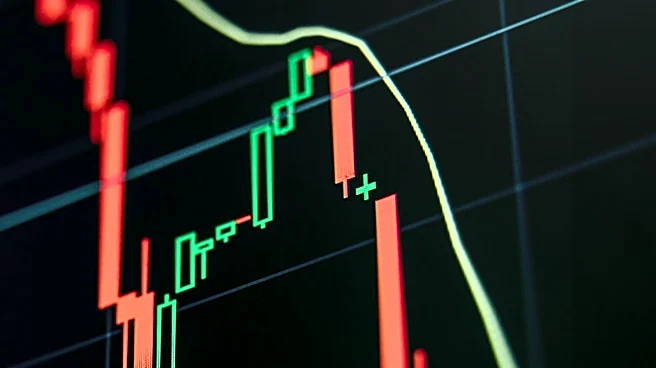
high of $649.42. The decline was rapid, with shares first closing more than 35% below the record on November 5, just 30 days after the peak, and sinking 17% on that day alone. A brief recovery to around $585 a week later was not sustained, as the stock fell again following a short-seller report on November 19 and a broad sell-off in chip stocks on Tuesday, November 24. Historically, AMD's stock has experienced similar drops of 35% or more from a record six other times since 1980, though never as quickly. While the stock has always recovered, the recovery periods have varied significantly, ranging from about 1.6 years to almost 20 years.
Why It's Important?
This significant drop in AMD's stock, and the historical context of its past recoveries, is important for investors and the broader technology market. It highlights the inherent volatility of the semiconductor industry, particularly for growth stocks like AMD. The rapid decline underscores how quickly market sentiment can shift due to various factors, including short-seller reports and broader sector-wide sell-offs. For current shareholders, the need for a 57% increase to reach previous highs indicates a substantial challenge and potential for prolonged recovery. The historical data suggests that while recovery is possible, the timeline is unpredictable, with some past comebacks taking over a decade. This situation also brings into focus the company's fundamentals, as its revenue for the third quarter of 2026 climbed 45% year over year to a record $13.4 billion, with management expecting approximately $17 billion in fourth-quarter revenue. This strong business growth contrasts with the stock's recent performance, creating a complex picture for investors weighing the company's long-term potential against short-term market fluctuations.
What's Next?
Investors will be closely watching AMD's performance in the coming months, particularly its fourth-quarter revenue, which management expects to be around $17 billion, implying significant year-over-year growth. The company's ability to maintain strong sales in its data center segment, which includes AI chips and server processors, will be crucial for its stock recovery. The market will also monitor any further developments regarding the short-seller report from Hunterbrook, which alleged that a blacklisted Chinese server maker continued to receive newer AMD firmware and raised concerns about new U.S. export rules. AMD has denied these claims, stating it complies with U.S. export laws. The stock's future trajectory will depend on a combination of its financial results, the resolution of any regulatory or trade-related concerns, and the overall sentiment in the semiconductor market. Historical patterns suggest that the stock may continue to slide further before bottoming out, and recovery could be a lengthy process.
Beyond the Headlines
The recurring pattern of significant drops and eventual recoveries in AMD's stock price points to a deeper narrative about the lifecycle and inherent risks of high-growth technology companies. While AMD's business fundamentals, particularly its strong revenue growth and leadership in the data center and AI chip markets, remain robust, the stock's volatility reflects external pressures and market psychology. The short-seller report, regardless of its veracity, highlights the scrutiny faced by major tech players, especially concerning international trade compliance and intellectual property. This situation also underscores the broader economic implications of geopolitical tensions, as U.S. export rules and trade blacklists can directly impact the global operations and market valuations of American companies. For the technology sector as a whole, AMD's experience serves as a case study in navigating rapid innovation, intense competition, and an increasingly complex regulatory environment, where even strong business performance does not guarantee stable stock appreciation.