






What's Happening?
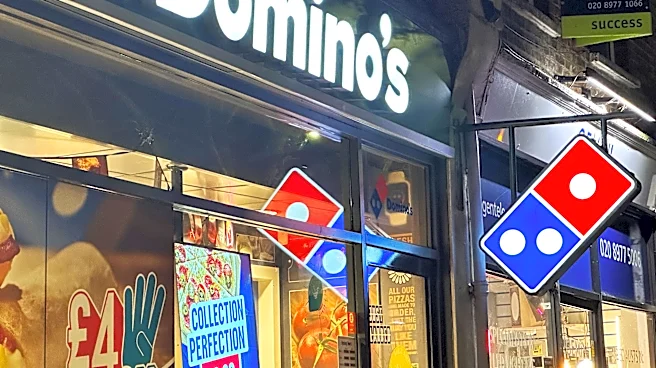
Domino's Pizza, Inc. (DPZ), headquartered in Ann Arbor, Michigan, is experiencing significant stock underperformance despite an increase in profitability. Over the past 52 weeks, Domino's shares have fallen 13.4%, and year-to-date in 2026, they have declined
13.3%. This contrasts sharply with the S&P 500 Index, which climbed 6.2% over the past year and gained 4.9% year-to-date. The company's underperformance is also more pronounced compared to the State Street Consumer Discretionary Select Sector SPDR ETF (XLY), which saw a smaller decline of 1.6% in 2026. This weakness is attributed to concerns over slower sales growth, heightened competition, and evolving consumer spending habits. In Q3 FY2026, U.S. same-store sales increased by a modest 0.3% year-over-year, while international comparable sales edged up by 0.2%, indicating a subdued demand environment for the global pizza chain.
Why It's Important?
The underperformance of Domino's stock highlights the challenges faced by established quick-service restaurant operators in a competitive market with shifting consumer preferences. Despite its global reach and strong brand recognition, the company's inability to significantly grow sales impacts investor confidence and market valuation. The subdued demand environment, as evidenced by minimal same-store sales growth, suggests that consumers may be re-evaluating their spending habits or opting for alternative dining options. This trend could affect other businesses in the consumer discretionary sector, particularly those reliant on consistent consumer spending. While Domino's has managed to improve profitability, with operating income climbing 8.3% and EPS rising 12.7% year-over-year in Q3, the market appears to prioritize top-line growth, indicating a potential disconnect between operational efficiency and investor expectations.
What's Next?
Domino's management is focusing on several strategies to address the challenges of slower sales growth and intensifying competition. These include emphasizing value-focused offerings, introducing menu innovations, and forming delivery partnerships. These initiatives aim to attract more customers and sustain demand in the current market. For FY2026, analysts project an 8.7% year-over-year growth in diluted EPS to $19.10. However, Domino's has missed EPS estimates in three of the past four quarters, achieving an earnings beat only once. This inconsistent performance raises questions about the company's ability to meet future financial targets and regain investor confidence. The effectiveness of its new strategies in boosting sales and improving market perception will be crucial in the coming quarters.
Beyond the Headlines
The situation at Domino's reflects a broader trend within the quick-service restaurant industry, where companies are grappling with evolving consumer expectations for value, convenience, and diverse menu options. The rise of third-party delivery services and increased competition from both traditional and new food service providers are reshaping the landscape. Domino's reliance on value offerings and menu innovation suggests a strategic pivot to maintain relevance and market share. This shift could lead to a more dynamic and competitive environment across the food delivery sector, potentially impacting pricing strategies and profit margins for all players. The company's ability to adapt to these long-term shifts will be critical for its sustained success and could serve as a case study for other businesses facing similar pressures in the consumer discretionary space.